Managing your patients’ denture care

Maintaining the performance of dentures
There are a number of individual patient factors which can mean patients need help maintaining the performance of their dentures. These could be physical, clinical or behavioural, including:
- Oral anatomy – where the available surface area for adhesion is restricted1,2
- Xerostomia (dry mouth) – which can disrupt normal denture retention1
- Immediate full dentures – where fit may change over time as bone resorption occurs after tooth extraction3
- Preservation of natural teeth – where excessive functional forces may cause tooth mobility or loss4,5
- Patient psychology – how patients adapt to their denture3,6
- Denture hygiene – where the cleaning method or frequency results in poor denture hygiene and risks oral health5,7,8
- Denture stomatitis – caused by long-term inadequate denture cleaning or wearing dentures overnight9
Managing denture care: how denture adhesives and denture cleansers can help patients maintain performance
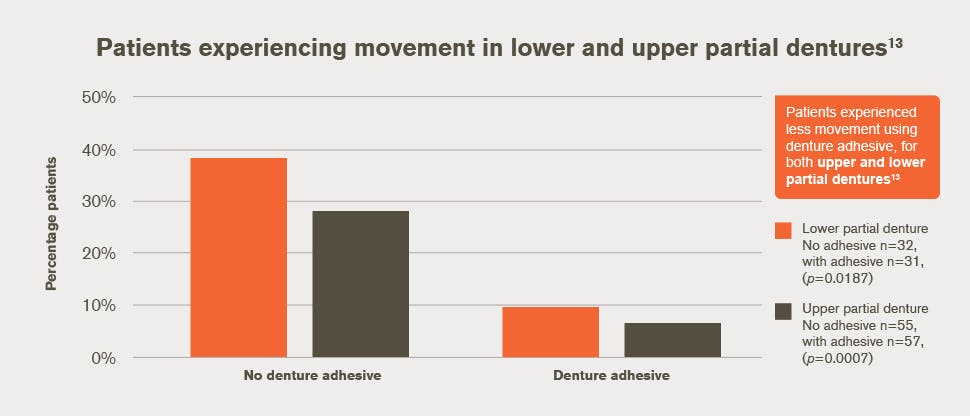
For product information and precautions, please read the product label and the package insert (if available) before use.
ACP guidelines
“…patient ratings showed that denture adhesives may improve the denture wearer’s perceptions in retention, stability, and quality of life…”2
Studies into managing patients’ denture care
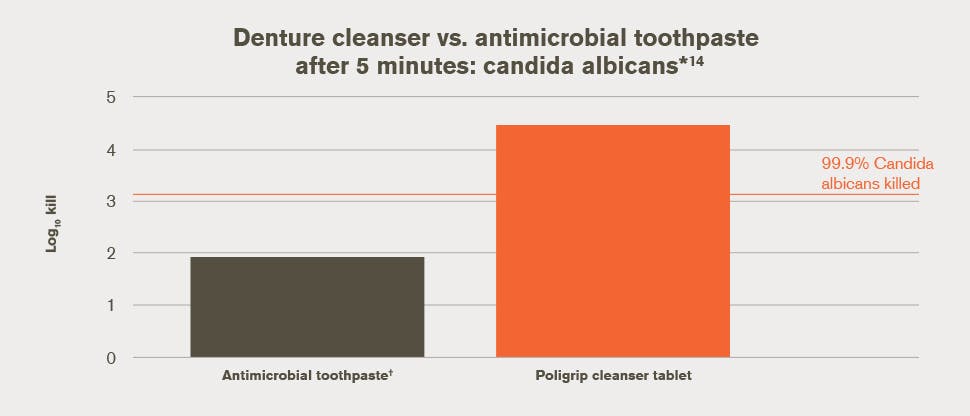
Denture cleansers – helping maintain dentures’ hygienic performance
When patients present with individual medical, physical or psychological factors that affect dentures’ hygienic performance, denture cleansers can help improve denture hygiene and kill the bacteria associated with denture stomatitis.2,14–16
Patients with poor denture hygiene achieved more effective cleaning when brushing was combined with a denture cleanser:
- Significantly larger reduction in plaque15,16
- Significantly larger reduction in total bacteria15,16
Denture cleansers can kill significantly more of the bacteria associated with denture stomatitis compared with other cleaning agents, such as antimicrobial toothpaste.14
*vs. no adhesive. The material integrity of denture materials, including polymethyl methacrylate (PMMA) and metals, was evaluated by scanning electron microscopy and profilometry after treatment with laboratory regimens simulating 2 years of typical consumer use. Treatments were also evaluated in a microbial kill time assay against a range of oral microorganisms with typical treatment regimens.14†Colgate Total toothpaste
ACP guidelines
“Dentures should be cleaned daily by soaking and brushing with an effective, nonabrasive denture cleanser.”2
Continuing denture care
In addition to daily denture care at home, patients need regular professional contact to ensure that their oral health is maintained.17

3-monthly recall during the first year of denture use.18

6–12-monthly check-ups to detect the presense of early caries or periodontal diseases.19
Managing denture care and helping your patients on their journey to optimal denture care with Poligrip


Causes and mechanisms
Find out more about the factors that can limit denture performance and compromise hygiene

Impact on patient quality of life
Find out about the impact that dentures have on patients’ daily lives