


Your student guide to dental appliance and denture care

An overview of caring for patients with dental appliances and dentures
Teeth impact how we all look and feel, and this influence remains true for the 18% of the US adult population who wear dentures.1
A well-designed denture can help restore chewing ability, improve speech, have aesthetic appeal and help maintain overall oral health.2
However, patients face challenges at all stages of the denture journey and must adapt to a number of different prostheses: partial dentures, immediate dentures following tooth extraction, and full dentures.3,4
Each patient’s experience with dentures will be different. Individual needs surrounding concerns such as xerostomia, physical and psychological factors, and patient adaptation to dentures can affect how dentures perform by affecting their retention and stability.3–7
What causes oral health issues related to dental appliances & dentures?
Up to 88% of denture wearers do not clean their dentures effectively.8
Poor hygiene with partial dentures may compromise the health of remaining natural teeth by:
- Harboring bacteria which may cause problems for the remaining teeth and oral surfaces9-11
- Causing an increase in plaque accumulation, possibly resulting in caries and periodontitis12,13
Inadequate cleaning may also lead to denture stomatitis, a yeast infection that causes the area underneath the denture to become very red.14,15 Left untreated, it can cause soreness of the mouth.8,14
Restrictions in patient oral anatomy, and conditions such as xerostomia (dry mouth) can limit denture retention and stability.3,5 Well-fitting denture performance can be limited by patients’ oral anatomy,16 and can be gradually affected by bone resorption over time.4,16
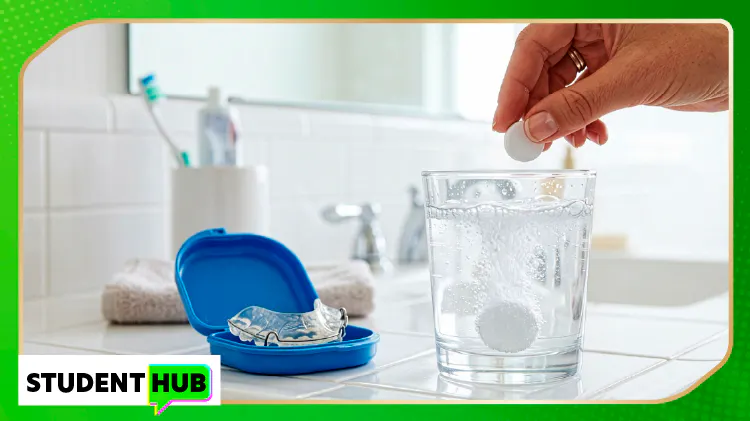
Dental appliances such as retainers also need to be kept clean. Failure to correctly clean them can result in:17
- Build-up of bacteria, plaque and tartar, potentially leading to gingivitis
- Odors and staining
- Reduced durability due to plaque, sugars and food acids degrading plastic retainers
Click on the image to learn more about the causes of denture-related oral health issues.
What are the impacts on patients?
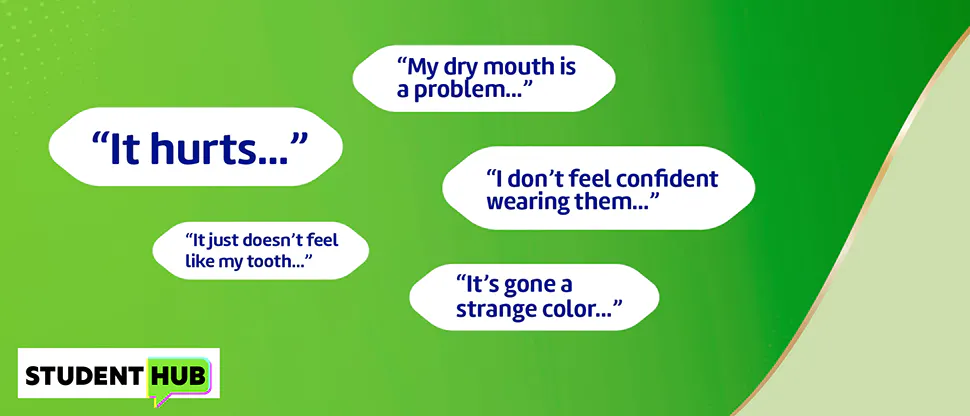
New denture wearers can face a difficult transition.7, 18-20 They may have unrealistic expectations for their new dentures,7 and the transition from natural teeth can be traumatic.18
Common issues experienced by denture wearers include:
- Denture movement when speaking or eating21,22
- Food trapped beneath dentures21
- Partial dentures causing further tooth loss22

How to identify dental appliance and denture issues
The American College of Prosthodontics recommends that ‘patients who wear dentures should be checked annually by the dentist, prosthodontist or dental professional for maintenance of optimum denture fit and function, for evaluation for oral lesions and bone loss and for assessment of oral health status.’4
During the appointment, you should check the following:
- Patient jaw size3
- Other concerns, such as xerostomia3
- Bone resorption16
- Removable partial denture12,23-25
- Psychological and physical wellbeing4,16
Click on the image to learn more about diagnosing oral health issues relating to denture use.

How to manage problems with dental appliances and dentures
Denture adhesives:
Denture adhesives can help the performance of dentures by improving:3,4,21
- Retention
- Stability
- Patient perceptions of fit and comfort
They can also help seal out irritating food particles.26
Dental appliance and denture cleansers:
Patients with poor dental appliance and denture hygiene achieved more effective cleaning when daily brushing was combined with a denture cleanser:
- Significantly larger reduction in plaque27
- Significantly larger reduction in odor causing bacteria,27
Denture cleansers can kill significantly more of the bacteria associated with denture stomatitis* compared with other cleaning agents, such as antimicrobial toothpaste.28,29
Click to learn more about how to help patients get the most from their dentures.
*Polident not indicated for treatment of stomatitis.


Enamel Wear
Discover the causes of enamel wear, how to recognize it and how you can help patients manage it.

Dentin hypersensitivity
Find out the causes and symptoms of dentin hypersensitivity, and how you can help patients treat it.
