Sensodyne Sensitivity, Gum & Enamel Toothpaste
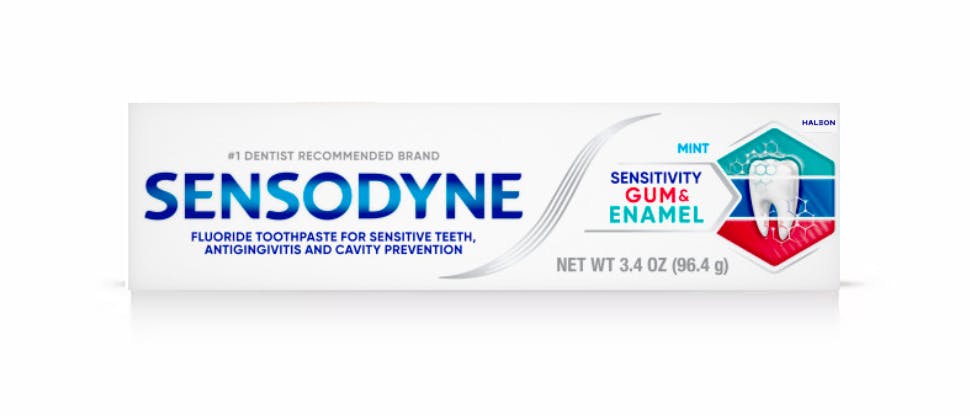
Sensodyne Sensitivity, Gum & Enamel Toothpaste
Protect your patients in three ways with Sensodyne, Sensitivity, Gum & Enamel—a daily toothpaste with Triple Action for sensitivity relief, gum protection and enamel strength.
Learn more about the latest innovation from Sensodyne below and make sure to visit our samples page to request complimentary Sensodyne product samples, which are subject to eligibility requirements and sample availability.

Dentin hypersensitivity starts with exposed dentin
Gum recession and enamel wear are the two leading causes of sensitive teeth, or dentin hypersensitivity, an oral health condition that as many as 1 in 2 patients may experience. When enamel is worn away at the gum line or gums recede, the dentin underneath becomes exposed—and with dentin being up to 10 times softer than enamel—teeth with exposed dentin are more vulnerable to future problems.
What is dentin hypersensitivity?
Dentin hypersensitivity (DH) is a prevalent clinical condition characterized by a transient, sharp pain arising from exposed dentin in response to stimuli that are typically non-noxious. These stimuli may include triggers that are:1
- thermal (hot or cold)
- evaporative
- tactile
- osmotic
- chemical
The pain cannot be attributed to any other dental pathology, such as caries, fracture, or pulp inflammation, and is thus considered a distinct diagnostic entity.
Mechanism of dentin hypersensitivity
Although the precise mechanisms of DH remain unclear, the hydrodynamic theory is widely accepted as the primary explanation for pain stemming from dentin sensitivity. According to this model, fluid movement within exposed dentinal tubules stimulates receptors in the pulp–dentin complex, leading to activation of sensory nerve fibers and the characteristic sharp pain response.1
Helping patients with dentin hypersensitivity
Patients with DH often report sensitivity in the affected teeth to routine mechanical and environmental stimuli, which can elicit short, sharp pain episodes.1
Dental professionals should first rule out other causes of tooth pain, then rely on two fundamental mechanisms for effective dentin sensitivity treatment:1
- Tubule occlusion — sealing or narrowing the open dentinal tubules in exposed dentin so as to reduce fluid shifts within them.
- Nerve depolarization — interfering with the ability of sensory nerves (in the pulp-dentin complex) to transmit sharp pain in response to stimuli.
Therapeutic strategies for dentin hypersensitivity treatment
- Behavioral measures: Counsel patients on proper oral hygiene practices with an emphasis on brushing technique. Dental professionals may provide guidance about managing erosive risks via dietary changes and identifying exacerbating habits.1
- Dentin hypersensitivity self care: Dental professionals may recommend the use of a specialty toothpaste for dentin hypersensitivity. These products commonly contain agents that are directed at tubule occlusion or nerve desensitization.1
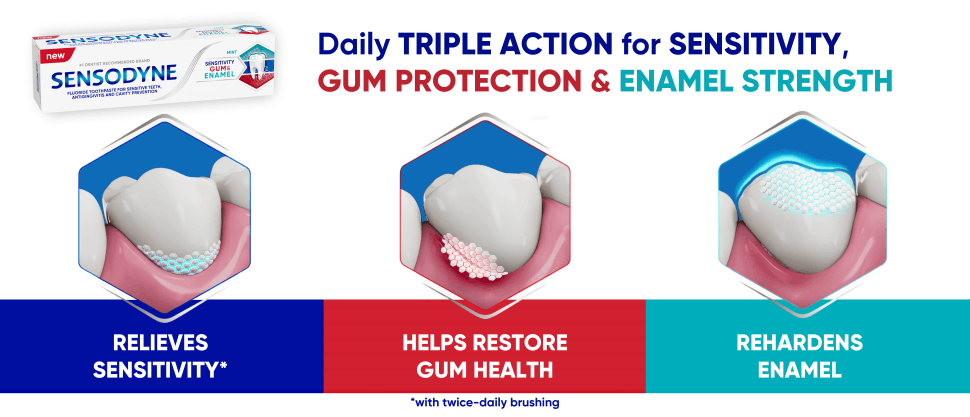
Sensodyne Sensitivity, Gum & Enamel: for strong, healthy teeth & gums
Help your patients with not just one but all three of these oral health issues with Sensodyne Sensitivity, Gum & Enamel, featuring a formulation that:
- Builds a protective layer over the sensitive areas to relieve sensitivity*
- Targets and removes plaque bacteria**
- Strengthens enamel surface and protects teeth from dietary acids, while being gentle on enamel*
- Provides a cooling sensation, leaving patients’ mouths feeling extra fresh
*with twice-daily brushing**associated with gingivitis to improve gum health
Sensodyne Sensitivity, Gum & Enamel Toothpaste
Tell your patients about our daily Triple Action toothpaste. It provides a clinically proven ingredient for sensitivity relief and daily protection against dentin hypersensitivity and cleans bacteria from along the gumline.*
*with twice daily brushing
Explore related content


Samples
Request Haleon product samples, which are subject to eligibility requirements and availability.