NOVAMIN formulations
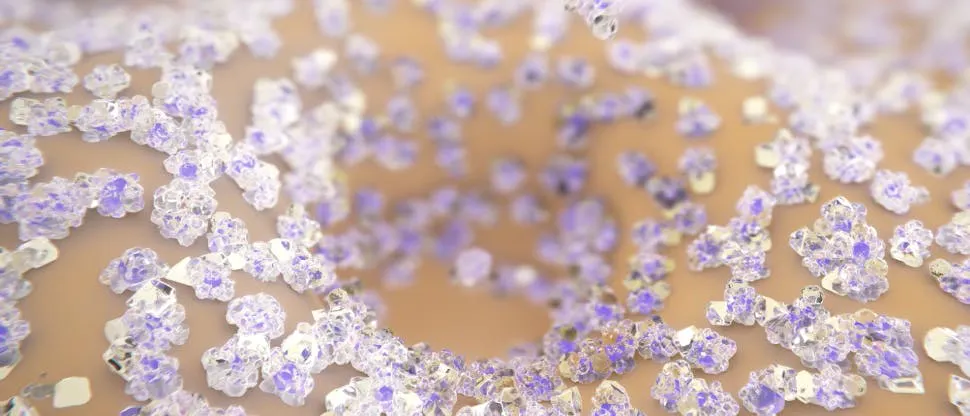
NOVAMIN®
SENSODYNE toothpaste formulations with NOVAMIN form a protective layer over exposed dentin for lasting protection from dentin hypersensitivity.1,2*
*With twice-daily brushing.
Innovative NOVAMIN technology
NOVAMIN is specially formulated in SENSODYNE Repair & Protect and SENSODYNE Clinical Repair toothpastes. The non-aqueous formulation ensures NOVAMIN becomes active in saliva, working with natural oral physiology to repair sensitive teeth2-6*
- Once in contact with saliva, NOVAMIN initiates a cascade of ionic exchanges, involving sodium and hydrogen ions, resulting in a localized pH rise
- The release of sodium ions, coupled with the localized pH rise and the release of calcium and phosphate ions, facilitates the precipitation and crystallization of a calcium phosphate hydroxycarbonate apatite (HCA) which binds to collagen fibres in exposed dentin, forming a dynamic protective layer over dentin
- Once bound to dentin, NOVAMIN particles act as calcium and phosphate reservoirs, forming a protective hydroxyapatite-like layer over exposed dentin tubules to help protect against dentin hypersensitivity pain
*Forms a protective layer over the sensitive areas of the teeth. Brush twice a day for lasting sensitivity protection.Read more
From Bioglass to NOVAMIN
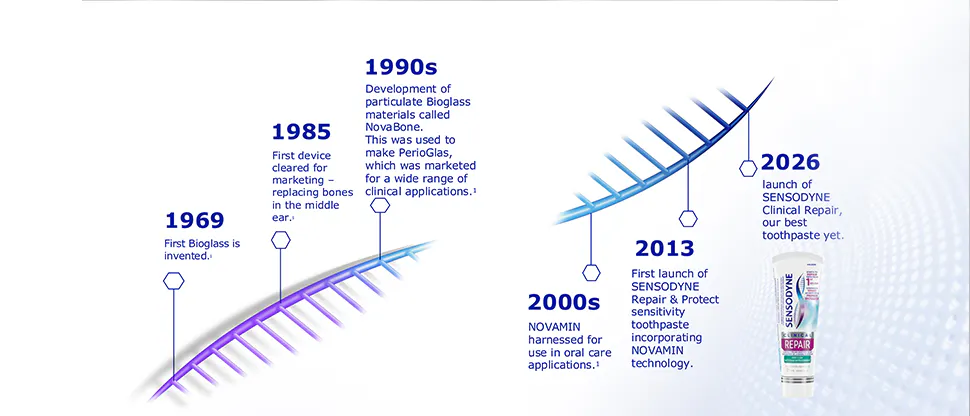
The first Bioglass was invented by American Professor Larry Hench in 1969, during the Vietnam war, in his pursuit to develop a material that could bond to bone.3
NOVAMIN was first harnessed for oral care applications in 2000s after use of particulate Bioglass materials in clinical applications for bones in the middle ear and elsewhere.7
NOVAMIN helps form an occlusive layer over exposed dentin1,2
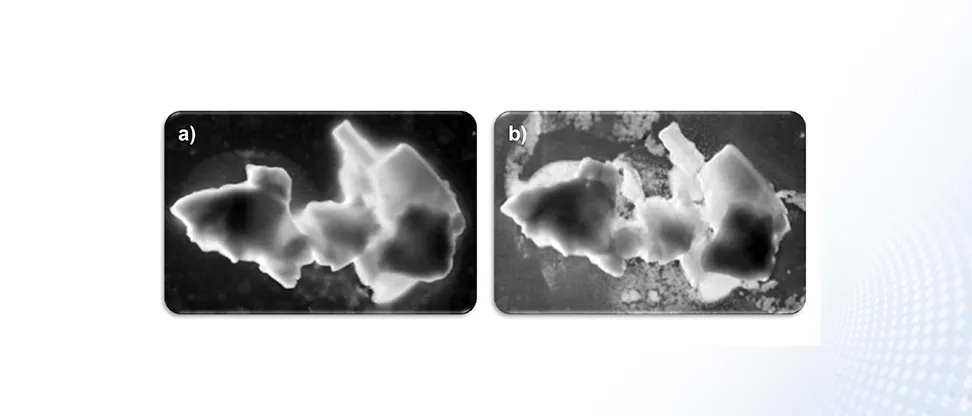
NOVAMIN activates immediately on contact with saliva
The chemical name for NOVAMIN is calcium sodium phosphosilicate (CSPS). The use of imaging and analysis techniques has demonstrated, in vitro, the reaction of CSPS from an amorphous material to a crystalline hydroxyapatite-like material. The calcium and phosphate content of the CSPS are involved in the development of the hydroxyapatite-like material. These experiments also confirmed an occlusion mode of action for the treatment of dentin hypersensitivity.8
NOVAMIN works on contact with saliva to occlude exposed dentin.
Image adapted from Earl J, et al., 2011. Real time Scanning Transmission Electron Microscopy images of NOVAMIN powder in water at a) 0 hours and b) 36 hours.8
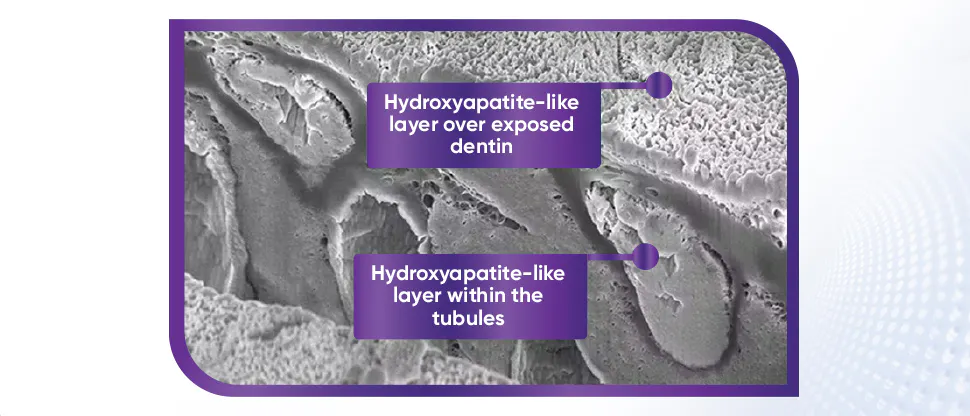
NOVAMIN generates a hydroxyapatite-like layer over and within exposed dentin3,4,8,9*
The image above is a scanning electron microscope (SEM) image showing the layer formed on treated dentin samples both over and within dentin tubules.8
The image shows a cross section of the dentin after 5 days treatment. The layer is approximately 1 µm thick and has occluded the tubules to at least the depth of the cut.8
An in vitro cross-section, SEM image of hydroxyapatite-like layer formed by supersaturated NOVAMIN solution in artificial saliva after five days (no brushing).8
In vitro studies have shown that the layer formed binds strongly to collagen within exposed dentin.3,6†
SEM image adapted from Earl JS, et al., 2011.7
*It forms a protective layer over the sensitive area of the teeth. Brush twice a day for lasting sensitivity protection.
†With twice-daily brushing.
-
The hydroxyapatite-like layer bonds to the collagen in exposed dentin1,2
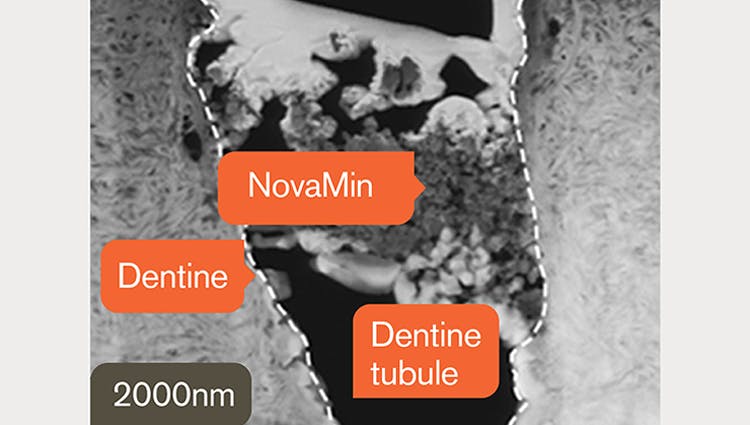
Transmission Electron Microscopy (TEM) image of dentin at 2000nm
The occluded dentin tubule runs from top to bottom of the image.1
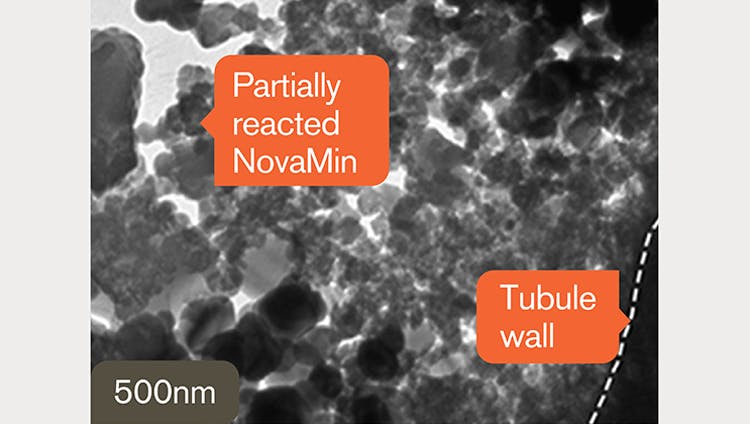
Transmission Electron Microscopy (TEM) image of dentin at 500nm
High magnification showing NovaMin as the occluding material adjacent to inner wall of dentin tubule.1
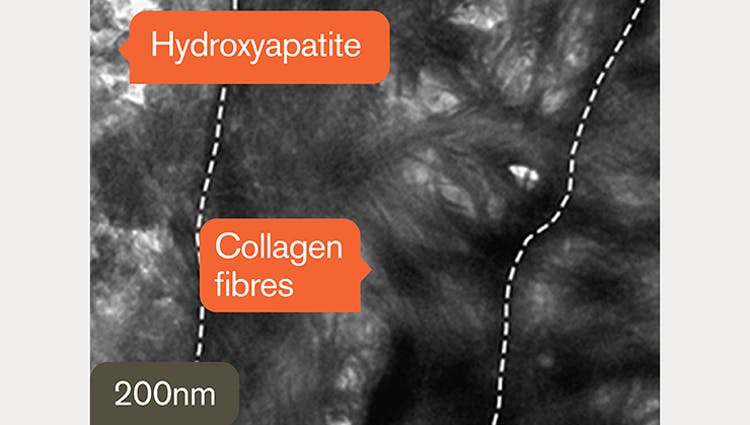
Transmission Electron Microscopy (TEM) image of dentin at 200nm
Very high magnification of the previous image showing crystalline calcium phosphate deposited adjacent to and among collagen fibres of dentin.1
TEM, transmission electron microscope. TEM images are of dentin after 5 days of in vitro NOVAMIN treatment and are adapted from Earl et al. 20111.
-
NOVAMIN forms a reparative hydroxyapatite-like layer which is resistant to everyday oral challenges1,6,9,10
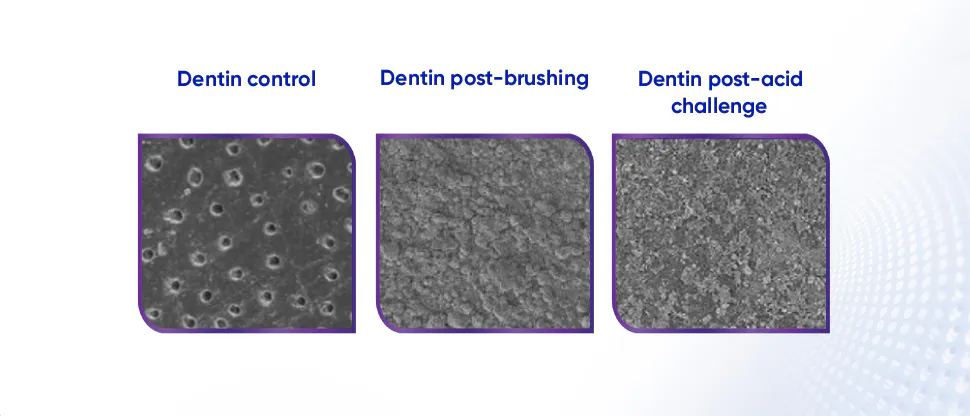
NOVAMIN toothpaste forms a reparative hydroxyapatite-like layer which is resistant to everyday oral challenges1,6,9,10
In vitro studies have shown the hydroxyapatite-like layer formed with NOVAMIN is resistant to acid challenge:
- In vitro studies have demonstrated the robustness of the layer to chemical (dietary acid) challenge (Earl JS, et al., 2011; Burwell A, et. al., 2010; Wang Z, et al., 2010; Parkinson CR, et al., 2011).1,6,9,10
- In vitro studies have demonstrated the robustness of the layer to physical challenge (brushing and microhardness indenter) (Parkinson CR, et al., 2011).9
We see in the SEM images, from an in vitro study conducted in 2011, dentin pre-treatment, post-brushing and then post acid challenge. The third image shows that the layer formed by NOVAMIN is robust to challenge by common dietary acids.1
Image adapted from Earl JS., et al, 2011.1 Brushing challenge: 200 brush strokes with wet (deionized water) medium bristle manual tooth brushing machine. In vitro SEM images of the tooth surface after twice-daily brushing for 4 days with water, of a reparative layer formed after twice-daily brushing for 4 days with a NOVAMIN technology, and of the reparative layer post 5-minute cola challenge. Control = Dentin surface after 4 days brushing with water and immersion in artificial saliva.1
-
NOVAMIN helps create a reparative layer that is structurally similar to dentin 8
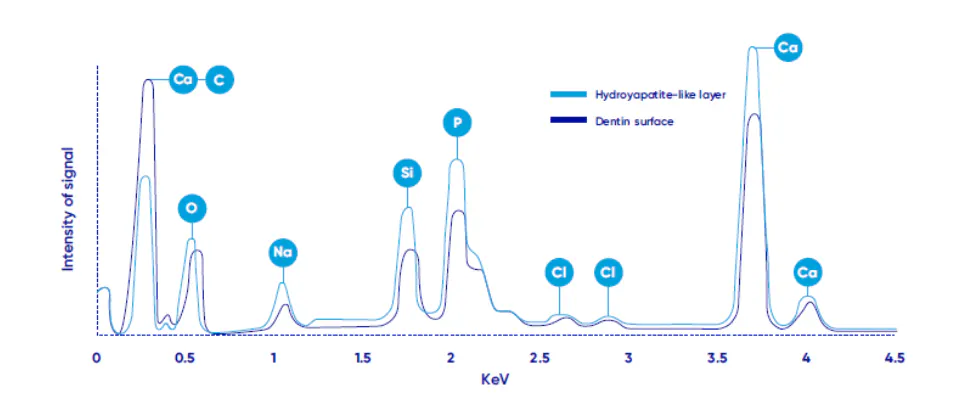
The Ca:P ratio of the hydroxyapatite-like layer is ~1.67, similar to that of dentin and hydroxyapatite1
When overlaid, energy-dispersive X-ray (EDX) microscopy plots of the new reparative layer (hydroxyapatite-like layer) and the dentin surface confirm their similar inorganic compositions.8
-
Effective sensitivity relief in 2 weeks
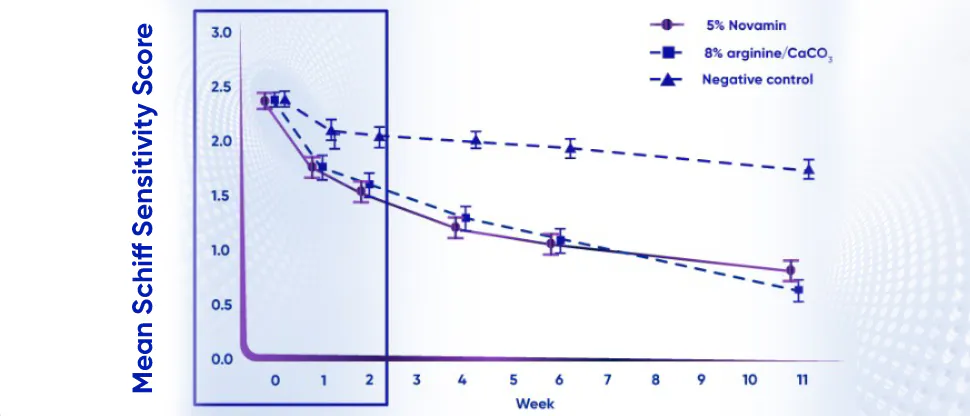
Clinically significant sensitivity improvements in 2 weeks14
This exploratory, randomized, examiner blind, parallel group, 11-week controlled study was completed in healthy adults with self-reported and clinically diagnosed dentin hypersensitivity with 135 subjects randomized to treatment.14
The 3 treatment groups used either a) toothpaste with 5% NOVAMIN + fluoride, b) toothpaste with arginine, calcium carbonate + fluoride or c) a regular toothpaste.14
Two independent stimulus-based efficacy measures were used to assess DH: tactile (using a Yeaple probe) and evaporative (air) sensitivity (Schiff sensitivity score).14
The 5% NOVAMIN toothpaste was shown to be effective in relieving dentin hypersensitivity in 2 weeks and improvements continued throughout the 12-week study.14
Chart adapted from Hall C, et al., 2017.14
-
Clinically proven to provide long-lasting sensitivity relief and ongoing protection*
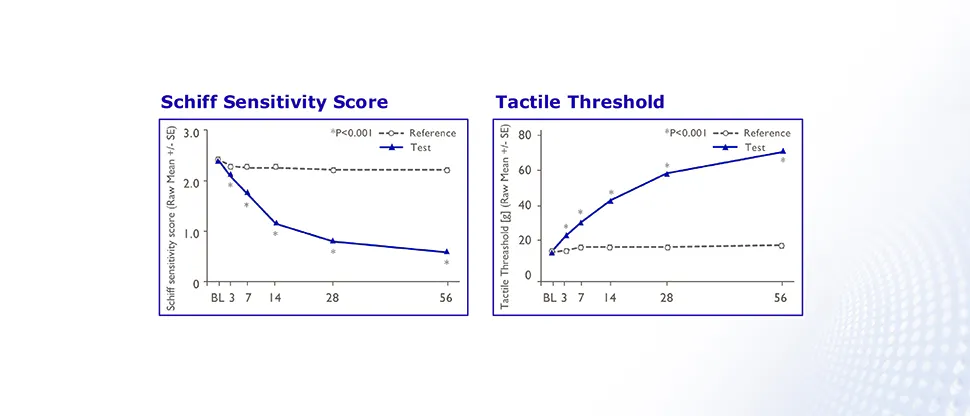
Effective protection against the pain of sensitive teeth*
This data is from an 8-week, single center, randomized, controlled, examiner-blind, 2-treatment arm, parallel design, stratified† clinical study (N=215) with self-reported and clinical examiner-confirmed dentin hypersensitivity (DH). Subjects brushed for 8 weeks twice daily with a 5% calcium sodium phosphosilicate (CSPS) toothpaste (SENSODYNE Clinical Repair with NOVAMIN), or a reference toothpaste.15
DH was assessed at intervals over the 8-week period in response to evaporative (air) stimulus (Schiff sensitivity score) and a tactile stimulus (Yeaple probe).15
All sensitivity measures demonstrated clinically significant ongoing reductions compared with baseline over the 8-week period.15
*With twice-daily brushing. Graphs adapted from Haleon data on file. Study 30010, 2024, published at IADR 2025.15
-
NOVAMIN technology occludes dentin tubules more effectively than certain other active ingredients globally in vitro13
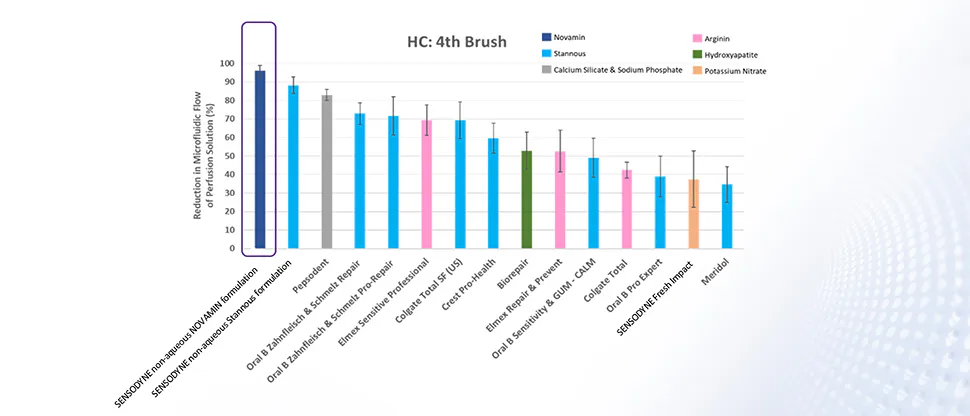
This in vitro study was conducted using a Hydraulic Conductance model to determine the reduction in fluid flow rate through dentin tubules, which correlates to tubule occlusion. Samples were sourced for this study in 2022 and the study was presented at IADR 2023.13
Three toothpastes were shown to be significantly more effective in occluding dentin tubules than the rest of the toothpastes, with SENSODYNE non-aqueous toothpaste containing NOVAMIN reducing the flow rate significantly (96.05%; p≤0.03) more than other tested products.13
The study also indicated that non-Aqueous products seem to perform better than products that contain water.13
Chart adapted from Moghaddam B, et al., Benchmarking Hydraulic Conductance Study on Market Leading Sensitivity Toothpastes. Presentation at IADR 2023.13
-
Clinically proven improvements in oral health-related quality of life16
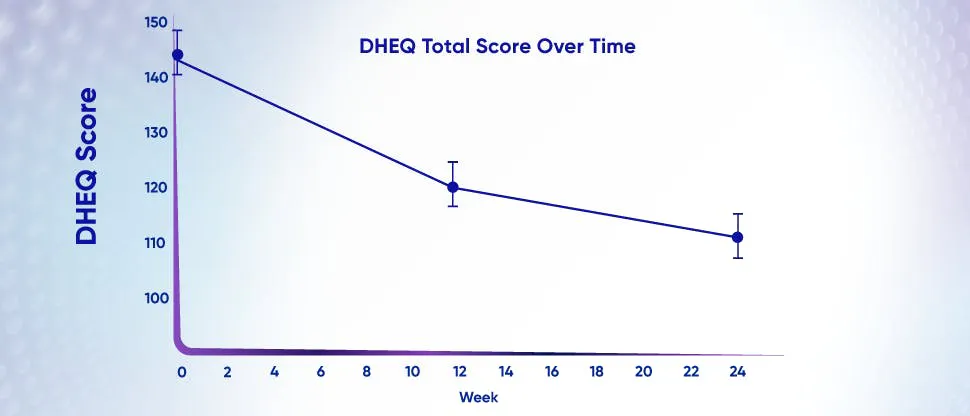
This data is from a 24-week, non-comparative clinical study in healthy adults (n=75) with clinically confirmed dentin hypersensitivity (DH). Subjects brushed for 24 weeks with a non-aqueous toothpaste with 5% NOVAMIN and 1426ppm fluoride.17
The dentin hypersensitivity experience questionnaire (DHEQ) was used to assess changes in subject-perceived DH before and during treatment in addition to traditional DH pain scores. These measures are indicative of oral health related quality of life (OHrQoL).17
All DHEQ measures, with the exception of the global oral health rating, demonstrated ongoing improvements in OHRQoL across the extended study period.17
Chart adapted from Haleon data on file. Study RH01897 Synopsis Report, 2014.16
-
NOVAMIN forms a resilient reparative layer, harder than dentin6,9,10,12
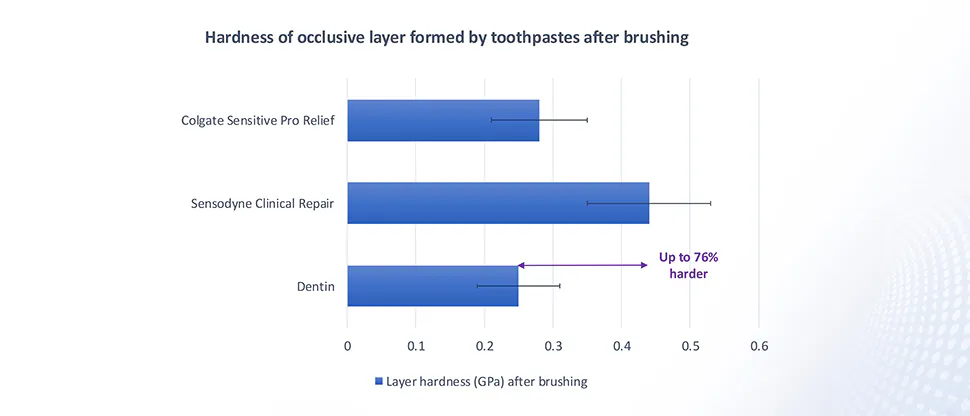
In vitro studies have shown the hydroxyapatite-like layer formed with NOVAMIN is harder than dentin and highlight that the mechanical properties of the layers formed by desensitizing agents are different.12
The graph is from a recent study showing the layer hardness on human dentin blocks following 4 days of twice-daily brushing for 30 seconds. Following each brush, all samples except the artificial saliva (AS) control were immersed in a 1:3 paste: AS slurry for 30 seconds. Layer hardness was measured by nanoindentation using a unique liquid cell set up to characterize the layers on a nanoscale level to avoid the substrate effect and to keep the dental tissue hydrated to provide a better mimic of in vivo conditions. A positive change from baseline is indicative of the surface becoming harder through the experiment.12
After four days of treatment SENSODYNE Clinical Repair with NOVAMIN produced a significantly harder layer (p<0.05) compared to other occluding technologies. This layer was also 76% harder than the dentin control, which was statistically significant (p<0.05).12
Graph adapted from Haleon data on file; Report QD-RPT-118201, 2024; presented at IADR New Orleans 2024. Colgate contains arginine.12
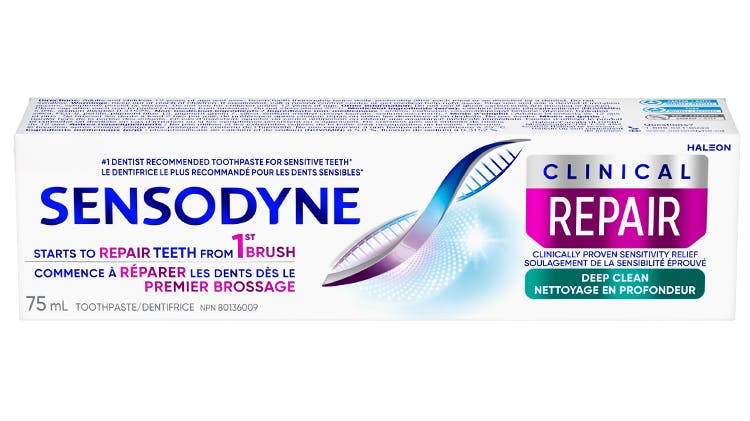
SENSODYNE Clinical Repair toothpaste with NOVAMIN
SENSODYNE Clinical Repair toothpaste is our next generation SENSODYNE with 5% NOVAMIN.
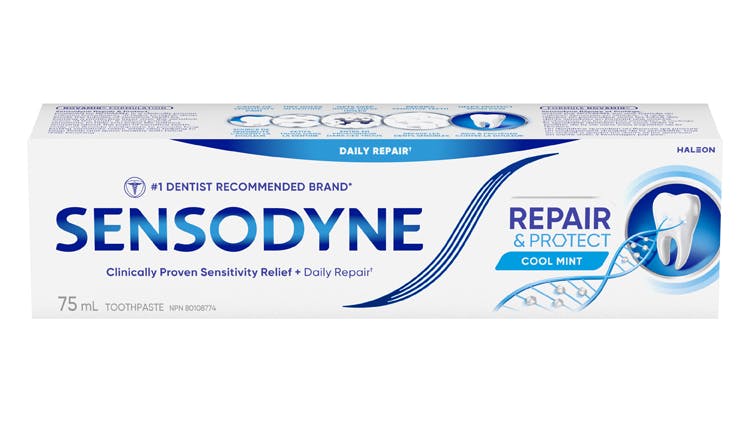
SENSODYNE Repair & Protect toothpaste
SENSODYNE Repair & Protect toothpaste is powered by NOVAMIN.
#1 recommended sensitivity brand by dentists15