

Toothache Pain Relief and Causes of Dental Pain: An Overview

Toothache relief and causes of orofacial pain
Tooth pain is among the most common complaints seen in dental and general healthcare practice. While it can range from mild discomfort to debilitating pain, the underlying causes are often diverse, spanning from dental decay to systemic conditions. For healthcare professionals, recognizing the potential sources, symptoms, and evidence-based management strategies is essential for timely intervention and improved patient outcomes.
Toothache Pain: 4 Quick Facts

Different causes of orofacial and dental pain
Pain in the mouth is often directly related to poor oral hygiene.1 While a dental professional should be consulted for severe, persistent pain, HCPs can provide guidance to their clients by better understanding what’s causing the toothache.
Learn about dental and non-dental causes of orofacial pain below:
Dental and Non-Dental Causes of Orofacial Pain
Clinical Presentation: Symptoms to Monitor
A patient presenting with orofacial pain may describe several symptoms. Understanding these symptoms is paramount to informing treatment recommendations until the patient can get to see a dentist:1,2,3,4,5,6,7
- Pain quality: Sharp, shooting, dull, gnawing, throbbing, or radiating
- Duration: Intermittent vs. constant
- Triggers: Sensitivity to hot, cold, sweet, or pressure
- Associated signs: Swelling, bleeding gums, fever, lymphadenopathy, or sinus pressure
- Progression: Worsening pain may suggest infection spread or abscess formation
For healthcare providers, detailed history-taking and examination are critical to distinguish between local dental pathology and systemic or referred causes.
Management approaches
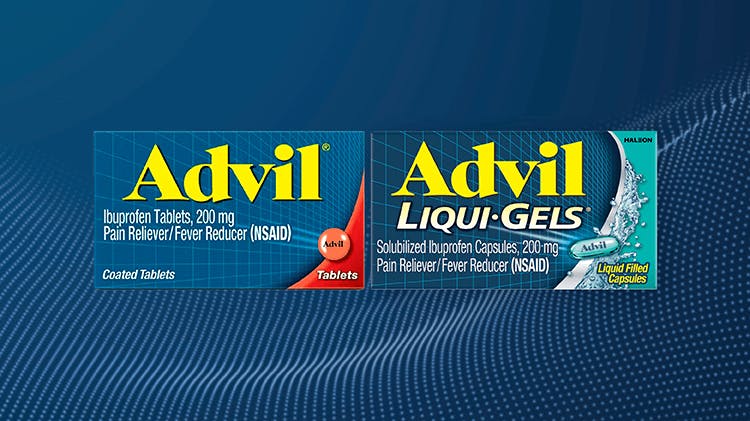
When advising patients how to stop tooth pain or manage orofacial pain until they are able to see a dental professional, the ADA—in conjunction with Penn Dental Medicine and the University of Pittsburgh School of Dental Medicine—has provided an immediate pain management resource. This resource indicates that ibuprofen alone (like Advil) or a multimodal therapy like ibuprofen and acetaminophen (like Advil Dual Action) are considered first line therapy for toothaches:8
| OTC Medication | Maximum Daily Dose | Tooth Pain Relief Duration |
| Ibuprofen (400 mg) | 2,400 mg | 6 hours |
| Ibuprofen (400 mg) and Acetaminophen (500 mg) | Ibuprofen: 2,400 mg Acetaminophen: 4,000 mg | 6-8 hours |
Multi-modal medications for enhanced OTC toothache pain relief
Multimodal analgesia, the practice of combining agents with different mechanisms of action to achieve effective pain control, has become a widely adopted strategy associated with improved patient outcomes. The combination of ibuprofen and acetaminophen has demonstrated favorable results, as the two medications utilize distinct metabolic pathways, allowing for effective analgesia with reduced individual dosing requirements.9
Clinical studies have shown that a fixed-dose regimen of ibuprofen 200 mg combined with acetaminophen 500 mg provides significantly superior analgesia compared with acetaminophen 1000 mg administered alone.9
Advil Dual Action for immediate management of toothache pain
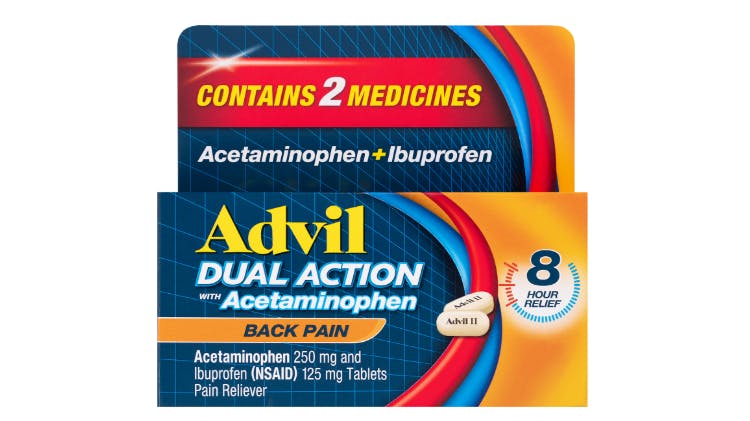
Advil Dual Action is particularly effective for tooth pain because it combines two complementary active ingredients: ibuprofen (125 mg) and acetaminophen (250 mg). In fact, it has the American Dental Association Seal, as the first pain product to be recognized as effective for helping to relieve dental pain.
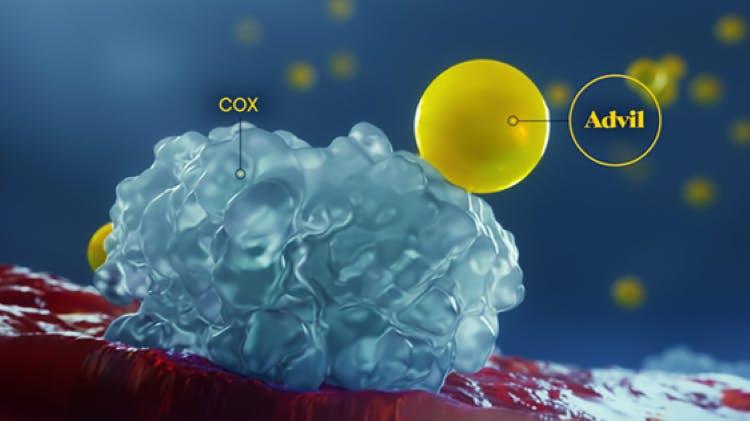
Ibuprofen works peripherally by inhibiting COX-1 and COX-2 enzymes, reducing prostaglandin production and thereby decreasing the pain caused by underlying inflammation. Acetaminophen, on the other hand, provides central analgesia through COX inhibition and serotonergic pathways, addressing pain signals at the level of the central nervous system.9
Together, these mechanisms create a multimodal analgesic effect that is broader and more powerful than either medication alone. This dual action makes Advil Dual Action well-suited for the multifactorial nature of dental pain, offering extended relief and convenient dosing compared with single-agent pain relief therapy.9 Advil Dual Action is dosed as 2 tablets that provide a total of ibuprofen/acetaminophen 250/500 mg per dose, given every 8 hours for a total of 6 caplets per day.
Recommend preventive oral health measures
Healthcare providers should refer patients presenting with toothaches and other orofacial pain to their dental professional for treatment, but should also reinforce oral health guidelines:1,2,3,5
- Reinforce oral hygiene: twice-daily brushing with fluoride toothpaste, interdental cleaning.
- Address modifiable risk factors: smoking cessation, decreased consumption of sugary foods, glycemic control in diabetics.
- Encourage routine dental evaluations to intercept disease progression.
Orofacial and tooth pain is not only a common dental issue but also a broader healthcare concern with implications for systemic health and quality of life. For healthcare professionals, recognizing the diverse causes, identifying red-flag symptoms, and implementing both immediate relief and referral strategies are essential. A collaborative approach between medical and dental practitioners ensures timely, effective care and improved patient outcomes.
Learn more about oral health and products that can help your patients manage health conditions by visiting Haleon HealthPartner.
Explore related content
Advil science
Advil treats pain caused by inflammation at the source. Learn more about Advil’s clinically proven efficacy and proven safety profile when used as directed.
Advil Dual Action
Explore Advil Dual Action, an effective combination of ibuprofen and acetaminophen that fights pain in 2 ways.