

Advil: The -Itis Pain Interrupter

Pain starts with inflammation
Inflammation plays a role at the source and as the cause of pain in many conditions. It contributes to the release of mediators like prostaglandins which sensitize nerves, making them trigger pain.1
Prostaglandins promote inflammation (by increasing blood flow and immune activity), sensitize pain receptors and raise body temperature in the hypothalmus.2
Conditions involving inflammation or irritation of a specific body part or tissue often end with the suffix ‘‑itis’. Examples include tendonitis, bursitis, epicondylitis, plantar fasciitis, sinusitis, osteoarthritis, and pharyngitis.
Inflammation is part of the body’s natural defence response. While acute inflammation plays a protective role in response to injury, it also causes pain and discomfort. NSAIDs can help manage this pain by reducing the inflammatory response, supporting recovery while limiting the impact of symptoms.¹
This page outlines common ‘itis’ conditions and highlights management guidance.
Pain relief starts with Advil: The -Itis Pain Interrupter
Advil contains ibuprofen, an NSAID, and treats the pain caused by inflammation at the source. 15+ expert medical societies recommend an oral NSAID, like Advil, as first-line for acute pain treatment.
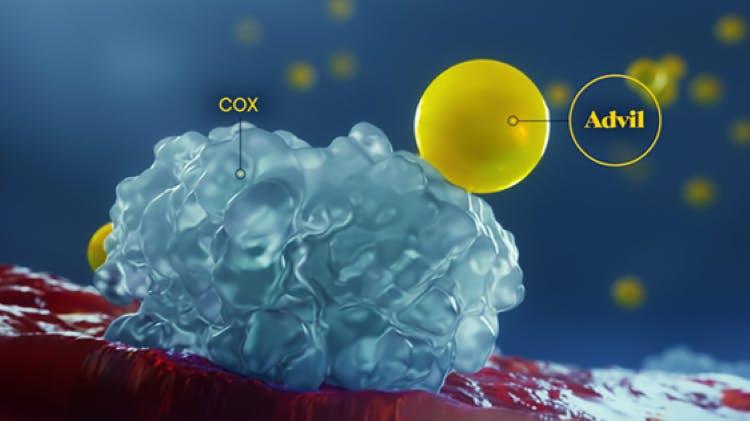
When cells are damaged, they produce arachidonic acid. COX-1 and COX-2 enzymes convert this acid into prostaglandin which can raise body temperature, cause inflammation and trigger peripheral pain pathways.3
Advil travels through the bloodstream and non-selectively inhibits COX-1 and COX-2 enzymes blocking prostaglandin production and consequently pain signaling.
Target -itis pain at the source of inflammation with Advil for stronger relief
- Advil targets pain at the source of inflammation, Tylenol (acetaminophen) doesn’t
- Clinically proven to provide superior relief of tough acute pain vs Tylenol (acetaminophen)
- Nothing has been proven to work better or faster on tough pain^
- Advil has 40 years of clinical studies and real-world evidence confirming its safety profile*
*when used as directed^among leading OTC pain relievers
-
Tendonitis (related to muscle ache and joint pain)
![Image of a person with tendonitis clutching the base of their heel on their foot.]()
What is tendonitis?
Tendonitis is inflammation of the thick fibers or tendons that attach muscles to the bone, mostly common in shoulders, elbows, wrists, knees and heels.4 It may occur after sudden intense injury or overuse from sports like tennis or household chores.4
Management
The goal of tendonitis treatment is to reduce pain and relieve irritation.
Non-pharmacological management includes activity modification, relative rest and protection.
NSAIDs such as Advil, with the active ingredient ibuprofen, or other pain relievers including non-NSAIDs are recommended as part of initial conservative management for acute tendon injuries and will relieve pain which includes muscle and joint pain.5-7
- Advil is indicated for short-term use for the management of pain and related symptoms
- If pain does not resolve in 10 days, the patient should be evaluated for alternate/additional treatment options
- This condition may need additional treatment for the underlying cause of the pain
-
Bursitis
![Image of a man outside in running attire clutching his knee as a result of bursitis pain]()
What is bursitis?
Bursitis is the inflammation of a bursa, or small sac that cushions the movement between bones, muscles and tendons.4
It causes pain that impacts the area and surrounding tissue and structure including muscle and join pain. Most common sites of involvement are the shoulder, hip, elbow and knee.
Management
Treatment includes several non-pharmacological options including rest and support.8
In addition, over-the-counter pain relievers like Advil, with the active ingredient ibuprofen, or other NSAIDs or non-NSAIDs may relieve bursitis pain that includes muscle and joint pain.8-10
-
Epicondylitis – lateral and medial (related to muscle ache and joint pain)
![A man clutching his elbow as a result of pain from tennis elbow.]()
What is epicondylitis?
Lateral epicondylitis, or tennis elbow, and medial epicondylitis, or golfer’s elbow, are painful conditions caused by repetitive use. This can cause pain in the elbow, including muscle and joint pain. Symptoms can include pain or weakness when grasping and aches or pains in the elbow area.11,12
Management
Treatment can include a number of ‘non-drug’ prevention and treatment options. In addition, pain relievers such as ibuprofen or naproxen sodium are an option for pain including related muscle and joint pain.12-14



-
Plantar fasciitis (related to muscle aches and pains)
![A woman with bare feet wearing exercise clothes who is clutching her foot with a highlight to show pain in the sole from plantar faciitis]()
What is plantar fasciitis?
Plantar fasciitis is the most common cause of plantar heel pain, with a high incidence in runners. It is caused by inflammation of the plantar fascia.15
Recommendation
Over-the-counter NSAIDs like ibuprofen (Advil) and other NSAIDs, aspirin and naproxen reduce pain and inflammation of plantar fasciitis.16,17
-
Acute dental pain – including postoperative pain and pulpitis (related to toothache)
![A woman clutching her face at the site of tooth pain in her lower jaw.]()
What is acute dental pain?
Acute dental pain can be a results of several conditions with a wide range of causes including tooth extractions and pulpitis.18
Pulpitis is inflammation in the inner part of the tooth that causes pain. The pulp contains nerves, blood vessels and connective tissue.18 Pulpitis is relevant in cases of toothache when dental care is not immediately available. Postoperative pain after simple and surgical tooth extraction does not fall under pulpitis.
Management
Ibuprofen (Advil) is recommended first-line therapy for the temporary management of acute dental pain.18,19


-
Sinusitis – acute rhinosinusitis (related to the common cold)
![A man rubs the bridge of his nose with his forefingers as a result of sinus pressure.]()
What is sinusitis?
Sinusitis is a common inflammation of the sinuses, mostly caused by viral upper respiratory infections.20
Recommendation
Current guidelines consider analgesics such as ibuprofen (Advil) or other NSAIDs to relieve pain or fever in the symptomatic treatment of acute rhinosinusitis.21,22
-
Osteoarthritis
![A woman in exercise leggings and sneakers clutches her knee while seated in the ground outside as a result of pain from arthritis.]()
What is osteoarthritis?
Osteoarthritis is a very common, painful inflammation of any joint, most often affecting the knee, hip and hands.23
Management
Oral NSAIDs such as ibuprofen (Advil) are used for temporary pain caused by inflammation relief.23
-
Pharyngitis (related to the common cold)
![A man wearing a striped shirt stood in his home clutches the sides of his neck as an indication of throat pain from pharyngitis.]()
What is pharyngitis?
Pharyngitis is a self-limiting inflammation of the throat caused by bacteria or viruses. It may cause a scratchy or burning feeling in the throat and cause pain when swallowing or talking.24
Recommendation
Conservative treatment with NSAIDs such as ibuprofen (Advil) is recommended to reduce pain symptoms as pain and fever in adults and children.25,26



Learn more about Advil and pain relief
Advil science
Advil treats pain caused by inflammation at the source. Learn more about Advil’s clinically proven efficacy and proven safety profile when used as directed.

Patient care resources
Access educational resources for your patients, to help them have a better understanding of their pain condition.


Assessing the safety profile and tolerability of ibuprofen
Download the study summary to review the safety profile and tolerability of ibuprofen when taken at OTC doses.

Join the Pain Relief Community
Sign up to access exclusive content for HCPs and order free samples for your patients.
