Sensitivity condition update
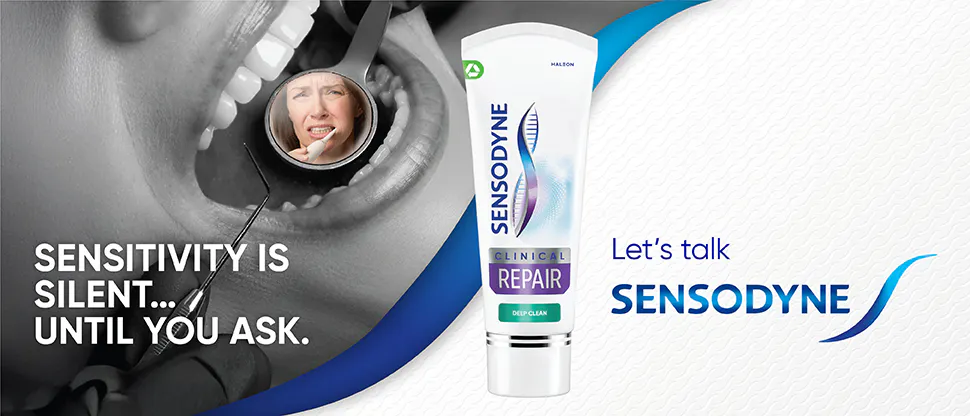
Sensitivity is silent… Until you ask
Your patients’ symptoms and reactions in the chair tell you about their dentine hypersensitivity, even if they don’t.
Our research with sensitivity sufferers shows that:
- Over two thirds alter their brushing habits to manage the discomfort of their condition1
- Nearly three quarters feel going to the dentist is hard because they know it is going to be painful1
This could lead to inadequate brushing or avoiding dental appointments and ultimately have oral health complications.
Noticing signs of sensitivity early may help protect patients’ oral health
- Look for signs of discomfort during the appointment such as air blast sensitivity during dental cleaning and hygiene appointments.
- Ask about the discomfort.
- Look for exposed dentine.
- Recommend a specialist sensitivity toothpaste like Sensodyne Clinical Repair, Sensodyne Repair & Protect or Sensodyne Rapid Relief.
The real-world evidence about the impact of dentine hypersensitivity
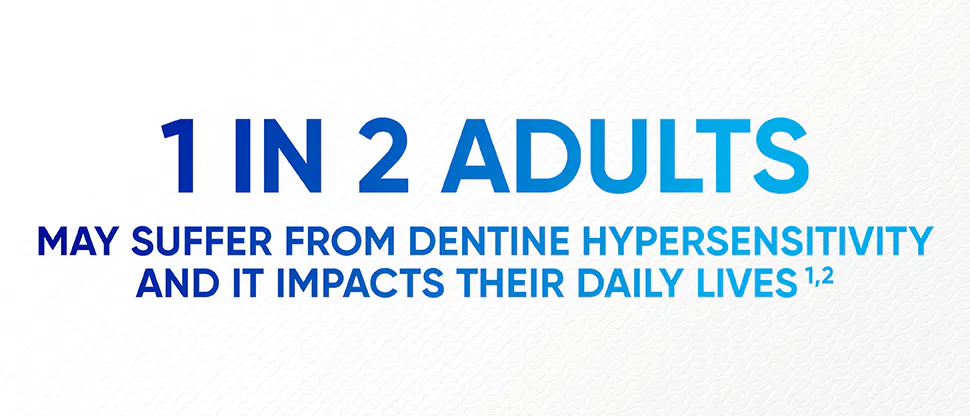
1 in 2 patients may suffer from dentine hypersensitivity (DH).2 Evidence from real-world evidence studies shows that DH impacts the daily quality of life for patients who suffer from the condition:1
- 93% of sensitivity sufferers have to change the way they eat and drink certain things.
- Nearly 3 out of 4 sensitivity sufferers say they avoid certain foods.
- Nearly 2 out of 3 sensitivity sufferers experience guilt about their sensitivity .
- 77% of sensitivity sufferers have been anxious because of the pain in their teeth.
- 95% of sensitivity sufferers feel it takes a lot of the pleasure out of eating and drinking .
- 92% of sensitivity sufferers are bothered by their sensitivity pain.
Access the clinical data and insights from the real-world evidence pooled analysis – presented at the International Association for Dental Research – to uncover the reality and lived experience for dental hypersensitivity sufferers.
Click below to learn more about patients impacts of the condition.
Causes of dentine hypersensitivity
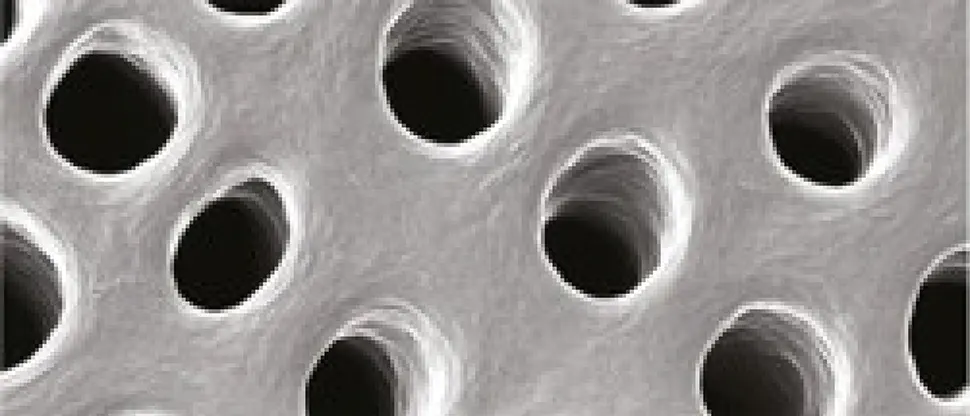
Dentine hypersensitivity is a common oral pain condition characterised as a short, sharp pain arising from exposed dentine in response to a stimulus, typically in response to chemical, thermal, tactile or osmotic stimuli that cannot be ascribed to any other dental defect or pathology.3
The condition develops when dentine becomes exposed as a result of tooth wear or gingival recession (lesion localisation) and the tubules then become open to both the oral cavity and the pulp as a result of abrasive and erosive forces (lesion initiation).4
Sensitive Conversations Podcast
Tune into our podcast with dentist specialist in endodontics Dr Kreena Patel, Director of the Dental Hygiene program at VCU School of Dentistry, Ms. Marion Manski, and Haleon's Global Medical & Scientific Affairs Director of Oral Health Charlie Parkinson. The trio delve into spotting the subtle signs of sensitivity, the far-reaching impacts patients face and how to initiate and navigate conversations around improving oral health at the chairside.
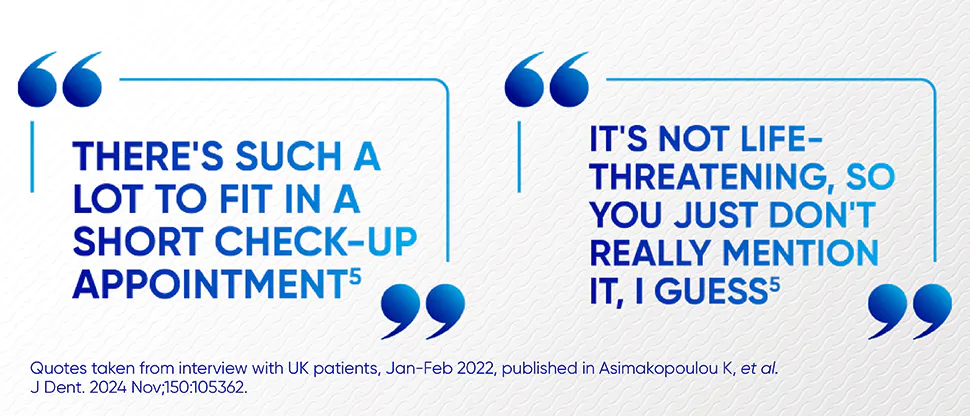
Sensitivity is silent… until you ask
A key part of diagnosis of the condition is the conversation. Research shows that despite the fact 1 in 2 patients may suffer from sensitive teeth, they may hesitate to mention the condition as they feel it is trivial and does not warrant your attention or they are anxious about potential treatments.2,6
Asking patients about the causes or triggers of pain or the adjustments they make can help to start the discussion.
ASK
- Any pain/sensitivity/sensations when eating/drinking something cold (such as ice cream)?
- Have you changed your brushing habits to avoid the sensitivity pain/sensations?
- Do you change the way you eat or drink certain things?
You can download a simple protocol to support diagnosis and discussion which includes validated questions for assessing patient impact.
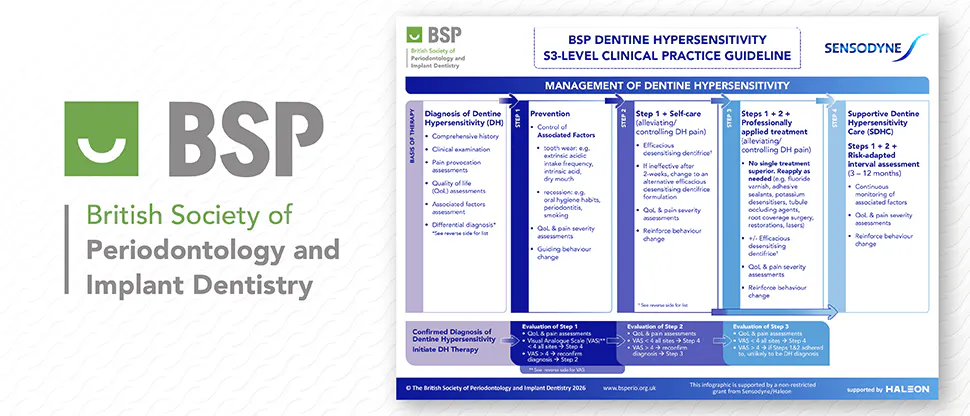
Implementing best practice diagnosis
The British Society of Periodontology has launched the S3-level Clinical Practice Guideline for dentine hypersensitivity. The easy-to-follow guidelines highlight the important steps for diagnosing and managing the condition using a clear evidence-based protocol. This includes recommendation of desensitising toothpaste, as a first-line self-care step and incorporates the various efficacious ingredients.
This important publication was developed following a consensus workshop involving oral healthcare professionals including dental nurses, dental hygienists, dental therapists, general practitioners, academics and both private and NHS specialists as well as external experts in medicine, behavioural science, pain and quality of life, alongside key stakeholder representatives and members of the BSP patient forum. This infographic was supported by a non-restricted grant from Sensodyne/Haleon.
A key feature of the guideline is a confirmed path for differential diagnosis. You can access a simple flow chart summary of the S3-level guideline and learn more on diagnosis and management below.

Uncovering the impact of sensitive teeth on daily life
To understand the impact of dentine hypersensitivity on quality of life, a team from the School of Clinical Dentistry, University of Sheffield, UK, in collaboration with Haleon, developed the Dentine Hypersensitivity Experience Questionnaire (DHEQ).7,8
The DHEQ explores how quality of life is affected by dentine hypersensitivity, such as its impact on patients’ daily activities or emotional wellbeing.7,8
Coming Soon
A portfolio of Sensodyne products for every patient

A singular focus and unwavering dedication for 60 years
Sensodyne was the first toothpaste brand to demonstrate effectiveness for sensitive teeth using validated quality of life clinical studies.
The S3-level clinical guidelines for dentine hypersensitivity, developed by the BSP, recognises the range of desensitising ingredients tailored to offer patients a first-line management option. Sensodyne is proud to partner with dental professionals and offer a range of efficacious products for sensitive teeth with patient benefits to support and promote daily use.
After 4 weeks’ use of Sensodyne Sensodyne Fresh Mint or Sensodyne Repair & Protect toothpaste in real world evidence studies, there were significant improvements in the quality-of-life impacts of the condition such as changes in brushing habits.1
A portfolio of Sensodyne products for every patient

Order samples
Ask about sensitivity, start a conversation, lets talk Sensodyne – Recommend Sensodyne Repair and Protect, Sensodyne Clinical Repair or Sensodyne Rapid Relief. Support your recommendation by requesting samples for your dental practice.
Sensitive Conversations Podcast
Access our exclusive podcast featuring experts in dentine hypersensitivity as they discuss tips for in practice conversations, diagnosis and management.

Management
Learn more about management of dentine hypersensitivity including desensitising toothpaste as a first line recommendation and the BSP S3-Level Clinical Guidelines.

Diagnosis
Dentine hypersensitivity diagnosis requires exclusion of conditions with similar symptoms. Access further information including the BSP S3-Level Clinical Guidelines.