The science of paracetamol (for pharmacists only)
For pharmacists: Paracetamol exerts its analgesic and antipyretic effect by inhibition of prostaglandins.1 However, unlike non-steroidal anti-inflammatory drugs (NSAIDs), it does not have any anti-inflammatory properties or associated with any gastrointestinal adverse effects when used as recommended.1

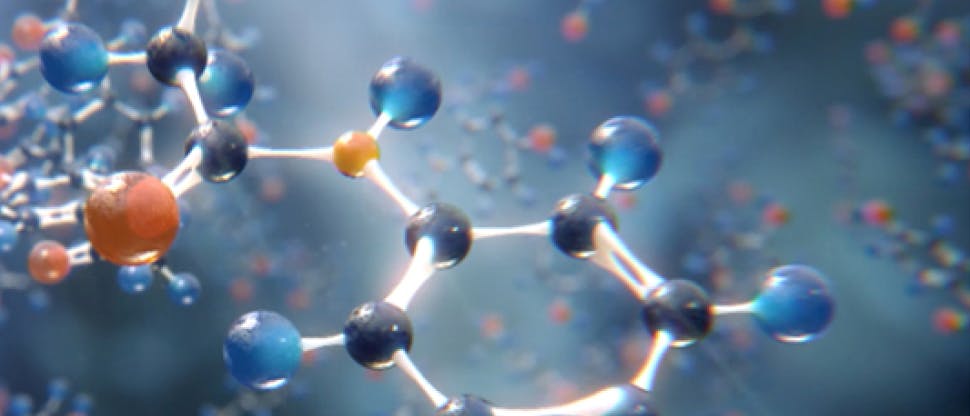
Paracetamol chemical structure

Paracetamol basics

Globally, paracetamol or acetaminophen is one of the most used analgesic and antipyretic over-the-counter drugs. Both its names are derived from its chemical name, which is N-acetyl-para-aminophenol.1 From the time of its first introduction in 1955 for use in children with fever and pain, paracetamol is currently formulated as a single active compound or as part of multi-component preparations in combination with other drugs1 such as caffeine and aspirin for the relief of pain.

When paracetamol is taken as indicated, minimal serious side effects have been observed.2

  • Indications for paracetamol

    icon of doctors stethoscope

    Paracetamol is indicated for fever and pain relief in both adults and children.1 As it has few serious side effects when taken as directed compared to NSAIDs, paracetamol is a suitable drug choice in certain groups of patients such as those with bronchial asthma, gastric ulcers, impairments in blood coagulation e.g. haemophilia and hypersensitivity to aspirin.1

    Learn more

  • Recommended for mild-to-moderate pain

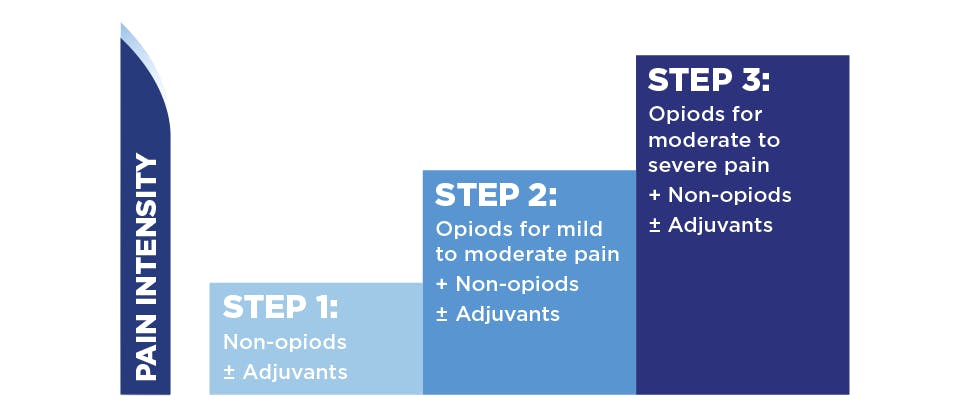
    WHO pain management diagram

    Recommended in all three steps of pain management intensity3

    Paracetamol is a recommended drug in all three steps of pain management by the World Health Organization.

    Learn more

  • Recommended as 1st line pain therapy

    icon of magnifying glass

    Paracetamol is the 1st line choice for treatment of mild-to-moderate pain as recommended by NICE.4

    For adults and children over 16 years a stepwise strategy is recommended:

    Step 1: Paracetamol should be used.

    Step 2: Substitute paracetamol for ibuprofen or, if unsuitable, a weak opioid

    Step 3: Paracetamol should be added to ibuprofen or weak opioid

    Step 4: Continue paracetamol and replace ibuprofen with alternative NDAID

    Step 5: A weak opioid should be started in addition to paracetamol and/or NSAID

    Learn more

  • Relieves fever for up to 6 hours

    The image is of a man holding his head

    Relieves fever for up to 6 hours

    In a randomised control study, paracetamol (500 mg or 1000 mg), aspirin (500 mg or 1000 mg) or a placebo was given to 392 adults with an acute, uncomplicated fever due to a suspected viral upper respiratory tract infection. Paracetamol 500 mg showed a rapid reduction in fever started as early as 30 minutes compared to the placebo group and lasted for at least 6 hours.5

  • Product information

    Please consult the summary of product characteristics for full product information.

    Panadol 500mg Film Coated Tablets (paracetamol), Panadol Actifast Tablets 500mg, Panadol Actifast 500mg Soluble Tablets, (paracetamol), Panadol Extra Film-coated Tablets Paracetamol 500mg Caffeine 65mg, Panadol Extra 500mg/65mg Soluble Effervescent Tablets (paracetamol, caffeine), Panadol Night Film-coated Tablets (paracetamol, diphenhydramine hydrochloride). Indications 500mg Film Coated, Actifast, Tablets, Actifast Soluble Tablets & Extra Soluble Effervescent Tablets: Short-term management of headaches, musculoskeletal disorders, menstrual pains, toothache, symptoms of colds and flu. 500mg Film Coated, Actifast Soluble Tablets: mild to moderate osteoarthritis pain diagnosed by a doctor. Night: Short-term treatment of bedtime symptoms of cold and flu pain, rheumatic and muscle pain, backache, toothache, headache, menstrual pain. Dosage Minimum dosing interval between paracetamol containing products is 4 hours. The lowest dose necessary to achieve efficacy should be used. 500mg Film Coated Tablets: Adults and children 16 years and over: 1-2 tablets, up to 4 times daily as required. Children aged 10-15 years of age: 1 tablet, up to 4 times daily as required. Max 4 doses in 24 hours. Do not give to children for more than 3 days without consulting a doctor. Do not give to children under 10 years. Actifast Tablets: Adults and children 16 years and over: 1-2 tablets up to 4 times daily as required. Children aged 12-15 years: 1 tablet up to 4 times daily as required. Max 4 doses in 24 hours. Do not give to children for more than 3 days without consulting a doctor. Do not give to children under 12 years. Actifast Soluble Tablets: Adults and children 16 years and over: 1-2 tablets dissolved in water up to 4 times daily as required. Children aged 10-15 years: 1 tablet dissolved in water up to 4 times daily as required. Max 4 doses in 24 hours. Do not give to children for more than 3 days without consulting a doctor. Do not give to children under 10 years. Extra Film-Coated Tablets and Extra Soluble Effervescent Tablets: Adults and children 16 years and over: 2 tablets up to 4 times a day. Children aged 12-15 years: 1 tablet up to 4 times a day. Do not exceed 4 doses in 24 hours. Do not give to children under 12 years. Night: Adults and children 16 years and over: 2 tablets, 20 minutes before bed. Children aged 12-15 years: 1 tablet, 20 minutes before bed. Other products containing paracetamol may be taken during the day but the total daily dose of paracetamol must not exceed 4000mg for adults and 2000mg for children aged 12-15 years. Do not give to children under 12 years except on medical advice. Do not use for more than 7 consecutive nights without medical advice. Contraindications All: Hypersensitivity to paracetamol or any of the other ingredients. Night: Closed angle glaucoma, porphyria. Precautions All: Do not use with any other paracetamol-containing products. Those with underlying liver or kidney impairment should seek advice before using. Caution, regarding paracetamol, if used at therapeutic doses for a prolonged period or administered concomitantly with flucloxacillin due to increased risk of high anion gap metabolic acidosis (HAGMA), particularly in patients with severe renal impairment, sepsis, malnutrition and other sources of glutathione deficiency (e.g. chronic alcoholism). If suspected, discontinue use promptly and monitor closely, including measurement of urinary 5-oxoproline. . Actifast Soluble Tablets and Extra film-coated Tablets: Use in caution in patients with one or more risk factors for hepatotoxicity including low body weight (<50kg), renal and hepatic impairment, chronic alcoholism, concomitant use of hepatotoxic drugs, sepsis and in acute and chronic malnutrition (low reserves of hepatic glutathione). 500mg Film Coated Tablets, Actifast Tablets, Extra Soluble Effervescent Tablets and Night: Cases of hepatic dysfunction/failure have been reported in patients with depleted glutathione levels / glutathione depleted states, chronic alcoholism, sepsis or who are severely malnourished, anorexic, low body mass index. Do not exceed the stated dose. Prolonged use except under medical supervision may be harmful. Actifast Tablets: Contains 352 mg sodium per 2 tablet dose, use with caution in those on a low sodium diet. Actifast Soluble Tablets: Contains 854mg sodium and 100mg sorbitol powder (E420) per 2 tablet dose. Use in caution in those on a low sodium diet and patients with hereditary fructose intolerance should not take this medicine. Extra Film coated Tablets and Extra Soluble Effervescent Tablets: Avoid excessive caffeine intake. Extra Film coated Tablets: Consult a doctor high fever, or signs of secondary infection occur, or if symptoms persist for longer than 3 days. Contain sodium methyl parahydroxybenzoate (E219), Sodium ethyl parahydroxybenzoate (E215) and Sodium propyl parahydroxybenzoate (E217) which may cause allergic reactions (possibly delayed). Extra Soluble Effervescent Tablets: Caution in those with hereditary sugar intolerance or on a low sodium diet. Night: Avoid use with alcohol. Use with caution in the elderly and avoid use in elderly patients with confusion. Avoid concurrent use with sedatives (including hypnotics and anxiolytics), antimuscarinics and other antihistamines. Caution in those with epilepsy or seizure disorders, myasthenia gravis, narrow angle glaucoma, prostatic hypertrophy, urinary retention, asthma, bronchitis, COPD or with any form of glucose-galactose malabsorption or lactase deficiency. Avoid use of MAOIs within 2 weeks. Side Effects For a full list of side effects please refer to the relevant SPC. All: (Paracetamol)Very rare: Thrombocytopenia, anaphylaxis, cutaneous hypersensitivity reactions including skin rash, angioedema, Stevens-Johnson syndrome, Toxic Epidermal Necrolysis, serious skin reactions, bronchospasm, hepatic dysfunction. Not Known: High anion metabolic acidosis. Extra Film-coated Tablets and Extra Soluble Effervescent Tablets: (Caffeine) Not known: nervousness, dizziness, palpitation, insomnia, restlessness, anxiety, irritability, gastrointestinal disturbances. Night: (Diphenhydramine) Common: Fatigue, sedation, attention disturbance, dizziness, unsteadiness, dry mouth. Legal Category 500 mg Film Coated: 12s GSL; 24s Pharmacy Only. Actifast Tablets: 10s GSL; 20s Pharmacy Only. Actifast Soluble Tablets: GSL. Extra Film-coated Tablets: 12s GSL; 24s Pharmacy Only. Extra Soluble Effervescent Tablets & Night: Pharmacy Only. MA Number: 500 mg Film coated Tablets: PA 678/107/1; Actifast Tablets: PA 678/39/12; Actifast Soluble Tablets: PA 678/39/14 Extra Film-coated Tablets: PA 678/27/1 Extra Soluble Effervescent Tablets: PA 678/39/10; Night: PA 678/39/8. MA Holder: Haleon Ireland Limited, Clocherane, Youghal Road, Dungarvan, Co. Waterford, X35 Y983, Ireland. Text prepared: June 2025. Further information available on request.

Discover the Panadol range with paracetamol
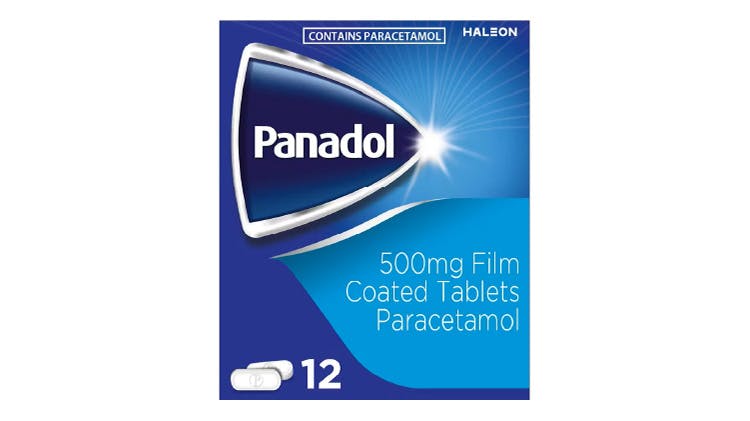
Panadol 500mg Film-coated Tablets pack shot

Panadol 500mg Film-coated Tablets (paracetamol)

For pharmacists: Optizorb technology enables Panadol 500mg Tablets with paracetamol to start relieving pain in just 15 minutes, with 2 tablets (1000 mg dose).6
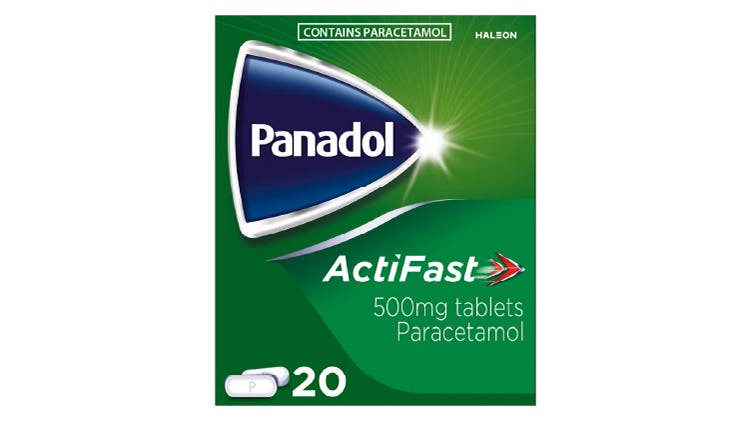
Panadol ActiFast Tablets 500mg packshot

Panadol Actifast Tablets 500mg (paracetamol)

For pharmacists: Panadol Actifast Tablets disintegrates up to 2x faster than standard paracetamol tablets.7
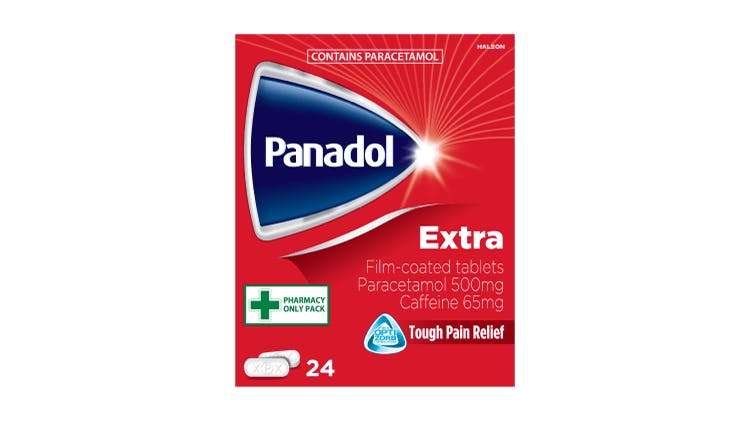
Panadol Extra Film Coated tablets 24 tablet pack shot (paracetamol, caffeine)

Panadol Extra 500mg/65mg Soluble Effervescent Tablets (paracetamol, caffeine)

For pharmacists: The ingredients in Panadol Extra Tablets provide fast and effective relief for tough pain.8

Learn more

Panadol Science Academy logo

Panadol Science Academy

For pharmacists: Panadol Science Academy includes information on pain and the analgesic action of paracetamol. Find out how to manage patients' pain on Haleon HealthPartner.
Find out more

Condition logo

Conditions

Our overviews of common pain conditions explore the causes, signs, symptoms and impact of each condition, and summarise the latest evidence-based management recommendations.
Learn more

Pill icon

Products

For pharmacists: Find out how our tailored treatments can help your patients manage their everyday pain.

Learn more