Dry Mouth Causes
Recognizing the Underlying Causes of Dry Mouth in your Patients
The most common causes of dry mouth in your patients are medication and medical conditions, though other causes can also lead to reduced saliva flow.1,8
Key takeaways about dry mouth
- Dry mouth (xerostomia) occurs when salivary glands fail to produce sufficient saliva.
- Common xerostomia causes include side effects from medications, medical conditions, radiation therapy and dehydration, which affect your patients’ saliva production in unique ways.
What are the causes of dry mouth?
Medication and disease are the two primary causes of dry mouth:2
- Medication is the number one cause1,3,4 of dry mouth as it is a side effect of many common medicines5 including antihistamines, antidepressants, diuretics, and sedatives5
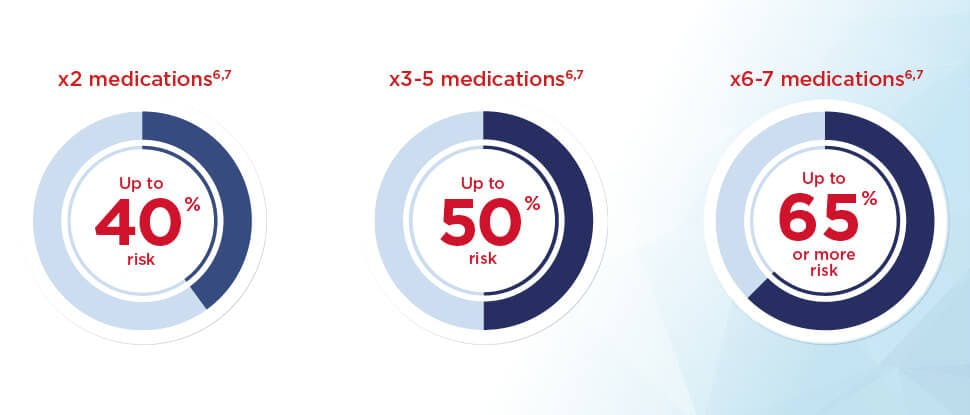
- Taking multiple medications may increase the risk of dry mouth by at least 40%6,7
- The medical conditions and comorbidities leading to xerostomia are diverse. They include Parkinson’s disease, anxiety and depression, rheumatoid arthritis, scleroderma, head and neck radiation and chemotherapy cancer treatments1,8
Patients with chronic diseases such as Sjögren’s syndrome and diabetes may not realize they have problems because the change in salivary production occurs gradually over time, resulting in slow-to-emerge symptoms.5
Failing to address may increase risk/likelihood of bad breath, mouth infections and cavities. Many of these oral health problems can be addressed by effectively managing dry mouth symptoms.1
Salivary gland hypofunction
Dry mouth is associated with changes in saliva composition and may have no immediately identifiable cause.1,10 Salivary gland hypofunction – the objective measurement of reduced salivary flow – can be associated with:1,5,11
- Medical treatments and polypharmacy
- Lifestyle choices
- Health conditions
- Damage to the salivary glands
Salivary gland physiology
Three main salivary glands; paratoid, submandibular and sublingual produce 90% of saliva.1 These glands produce the two major types of secretion that form saliva:1
- Serous fluid (mainly from the parotid and submandibular glands)
- Mucous (mainly from the submandibular and sublingual glands)
Different causes of dry mouth
-
Salivary Flow
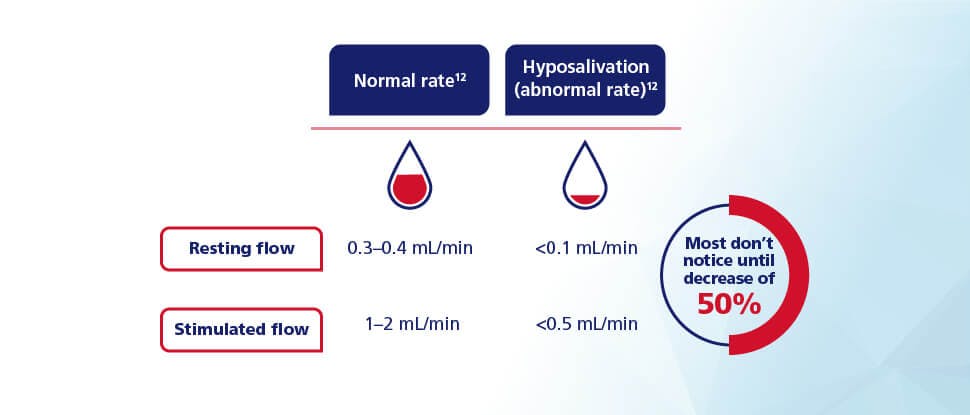
Abnormal salivary flow can lead to dry mouth1,10
Total salivary output should be approximately 1 liter per day, with salivary flow rates fluctuating naturally over this time.5 Patients may only realize that they have dry mouth when their natural salivary flow has decreased by almost half.5
-
Pharmacological Factors
Pharmacological factors
Medication use is the number one cause of dry mouth1,3,4
Over 500 commonly used medications can have side effects that cause dry mouth,2 including many over-the-counter and commonly prescribed medications such as antihistamines, antidepressants, diuretics and cytotoxic drugs.5,8,13 Furthermore, the risk of dry mouth increases in correlation with the number and types of medications.6,8
What are other causes of dry mouth?
In addition to medication use, there are various other physiological, behavioral, psychological and medical causes of dry mouth:
| Lifestyle Factors |
|
|
Medical Treatments
|
|
| Community Acquired Infections |
|
| Psychiatric Disorders |
|
| Genetic Disorders |
|
| Autoimmune Diseases |
|
Offer Your Dry Mouth Patients a Solution That Suits Their Different Needs, Around the Clock*
*with a daily Dry Mouth routine

Impact on Patient Quality of Life
Understand the impact that Dry Mouth has on patients’ daily lives.