
The science of caffeine and paracetamol

Paracetamol + caffeine
Panadol formulations come in combination with caffeine and paracetamol.
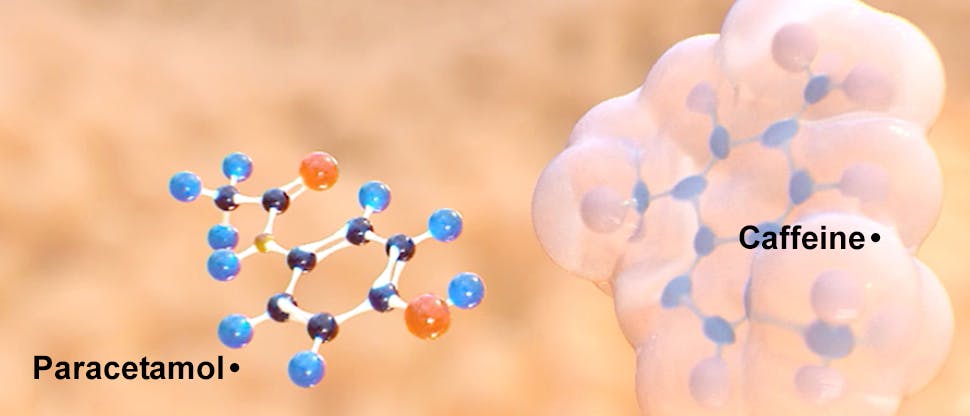
Paracetamol exerts its analgesic and antipyretic effect by inhibition of prostaglandins.1 On the other hand, the antagonism of adenosine receptors and inhibition of cyclo-oxygenase activity at some sites may explain caffeine’s adjuvant properties.2,4
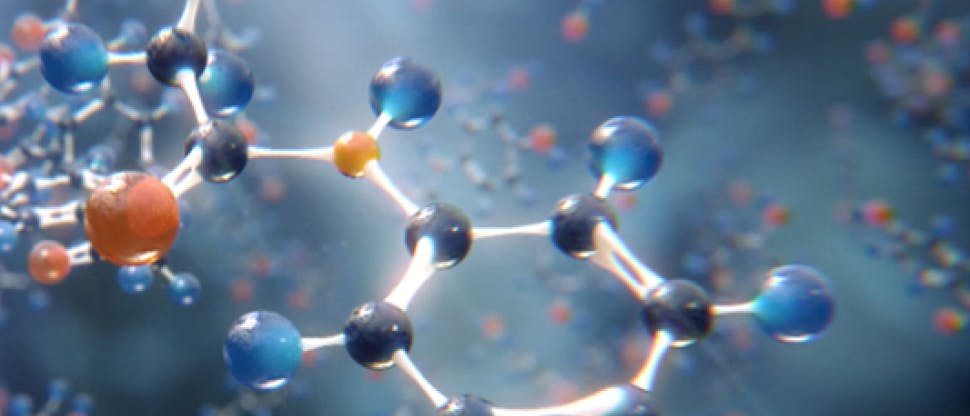
Paracetamol basics
Paracetamol or acetaminophen is one of the most used analgesic and antipyretic over-the-counter drugs globally.1
Do you know that contrary to popular believe, caffeine is not considered an addictive compound?3
Caffeine basics
First discovered in 850 A.D., caffeine was extracted as an active compound in 1819. It is the most common legal psychoactive drug and is a chemical relative of theophylline (used in treatment of asthma).2,3 Known for some of its effects such as increasing metabolic activity and heart rate, alertness, wakefulness and concentration, it is now combined with analgesics to increase absorption from the stomach.2,3
Discover the Panadol range with paracetamol and caffeine
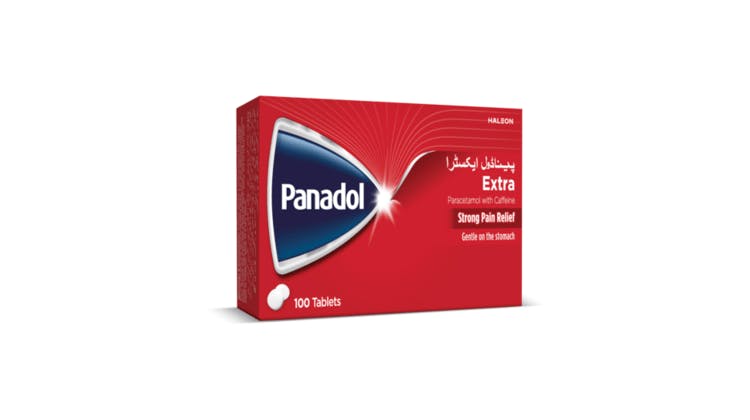
Panadol Extra
With a dual “active” formulation that fights tough pains such as headaches,5,6 migraines,7 dental pain8 and menstrual pain.9
Learn more


Pain Conditions
Learn more about different pain conditions and how you can help your patients.