


The science of paracetamol

Paracetamol
Panadol range of products uses paracetamol as its basic ingredient.
Paracetamol exerts its analgesic and antipyretic effect by inhibition of prostaglandins. However, unlike non-steroidal anti-inflammatory drugs (NSAIDs), it does not have any anti-inflammatory properties or associated with any gastrointestinal adverse effects.1
Paracetamol basics
Globally, paracetamol or acetaminophen is one of the most used analgesic and antipyretic over-the-counter drugs. Both its names are derived from its chemical name, which is N-acetyl-para-aminophenol.1 From the time of its first introduction in 1955 for use in children with fever and pain, paracetamol is currently formulated as a single compound or as an active ingredient of multi-component preparations in combination with other drugs1 such as caffeine and aspirin.2
When paracetamol is taken as indicated, minimal serious side effects have been observed.15
-
Indications for paracetamol

Paracetamol is indicated for fever and pain relief in both adults and children.1 As it has limited side effects compared to NSAIDs, paracetamol is the drug of choice in certain groups of patients such as those with bronchial asthma, gastric ulcers, impairments in blood coagulation e.g. haemophilia and hypersensitivity to aspirin.1
Multi-active paracetamol is also available depending on the added active ingredients. These include paracetamol with antihistamine and decongestants for cold and flu;3 and with caffeine and aspirin for migraine and tension headaches.4,5
-
Recommended for mild-to-moderate pain
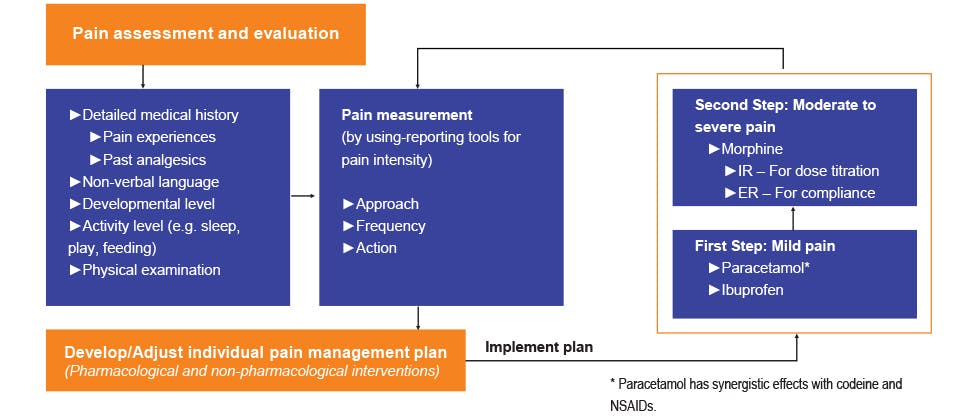
Recommended in all three steps of pain management intensity1
Paracetamol is a recommended drug in all three steps of pain management by the World Health Organization. It is in fact, the recommended drug of choice in patients with long standing (chronic) mild-to-moderate pain e.g. in osteoarthritis.1
-
Recommended as 1st line pain therapy

Paracetamol is the 1st line choice for treatment of mild-to-moderate pain as recommended by recognised, international expert associations6-13 for:
- knee osteoarthritis (conditionally recommended)
- acute and persistent pain in the elderly
- tension-type headache or part of combination therapy for acute migraine
- pain and fever associated with vector-borne disease for which NSAIDs are not recommended.
-
Relieves fever in 30 minutes for up to 6 hours
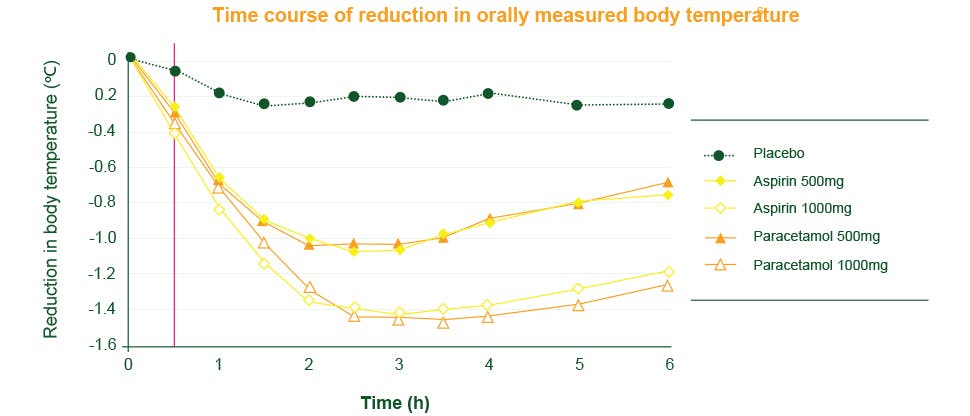
Relieves fever in 30 minutes for up to 6 hours
In a randomised control study, paracetamol (500 mg or 1000 mg), aspirin (500 mg or 1000 mg) or a placebo was given to 392 adults with an acute, uncomplicated fever due to a suspected viral upper respiratory tract infection. Paracetamol 500 mg showed a rapid reduction in fever as early as 30 minutes compared to the placebo group and lasted for at least 6 hours.14
Discover the Panadol range with paracetamol
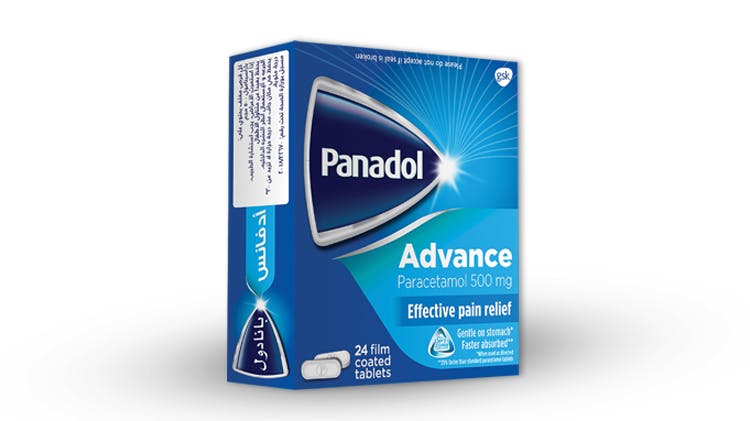
Panadol Advance with Optizorb technology
Panadol Advance (fast-dissolving acetaminophen) reached the therapeutic threshold 15 min faster than did standard acetaminophen (0.43 h vs. 0.68 h, P < 0.05).17
Learn more

Be a pain changer
An easy-to-use tool for pain assessment in your patients or customers.

Events and News
Get free access to live and on demand webinars that Haleon hosts with scientists and key opinion leaders to discuss topics around health and health care. In addition we present updates and summaries of the conferences and events Haleon attends to showcase our precision solutions, as well as to meet and have one-to-one discussions with healthcare professionals.
