

Meet the Haleon Pain Management Institute Expert Advisors

The Haleon Pain Index found that 93% of Australians experience everyday pain, yet more than half delay taking action to manage their pain. As part of our commitment to supporting and empowering the more than 20 million pain sufferers globally, Australia is proud to launch an Australian chapter of the Haleon Pain Management Institute.
The Australian Haleon Pain Management Institute chapter seeks to help address these findings by bringing together leading experts in pain, that will support healthcare professionals and patients across three key focus areas:
- advancing solutions for total mobility health
- creating patient-focused education and tools to support the quality use of medicines, for parents and caregivers
- enhancing healthcare professional education so they can better support and empower pain sufferers and deliver positive patient outcomes
Lead by a group of esteemed expert advisors, the Australian chapter of the Haleon Pain Management Institute will focus on improving pain outcomes for Australian patients by prioritising research and scientific innovation, healthcare professional education and patient empowerment.
The establishment of the Haleon Pain Management Institute Australian chapter reinforces our commitment to supporting people living in pain and bring us one step closer to ensuring better everyday health is accessible to more people.
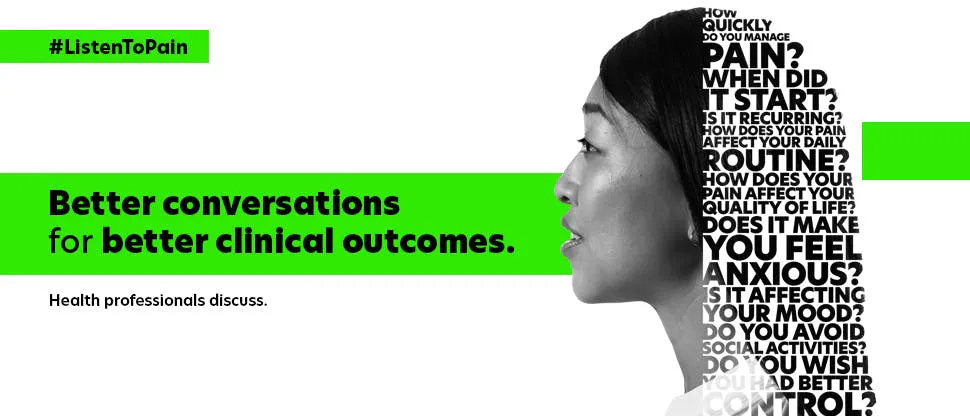
Better conversations for better clinical outcomes in pain management
-
Haleon Pain Management Institute Expert Advisors
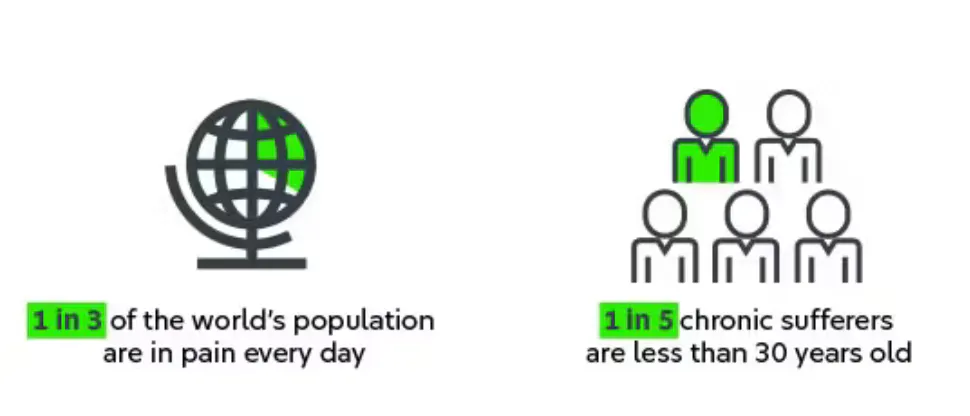
![Infographic: global statistics on pain. 1 in 3 of the world’s population are in pain every day]()
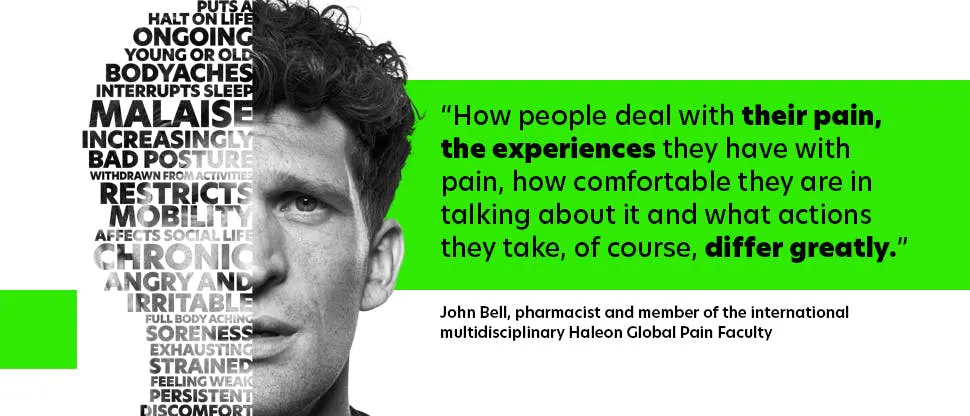
The Global Pain Index (GPI), in its 4th edition, is a comprehensive survey comprising over 19,000 online interviews with people across 19 countries. The GPI provides valuable insights into the impact of pain on people’s daily lives, as well as how gender, age and background affect the pain experience. John Bell, a pharmacist and Haleon Pain Management Institute Expert Advisor, says, “How people deal with their pain, the experiences they have with pain, how comfortable they are in talking about it and what actions they take, of course, differ greatly.”
![John Bell quote: “how people deal with their pain, the experiences they have with pain, how comfortable they are in talking about it and what actions they take, of course, differ greatly”]()
Age also plays a role in how patients interact with HCPs and manage their pain. Bell mentions that generation Z “were far more likely to wait before they treated their pain and were far less likely to take medication.” So why do patients often delay their treatment or avoid going to HCPs altogether?
-
The road to treatment is often long
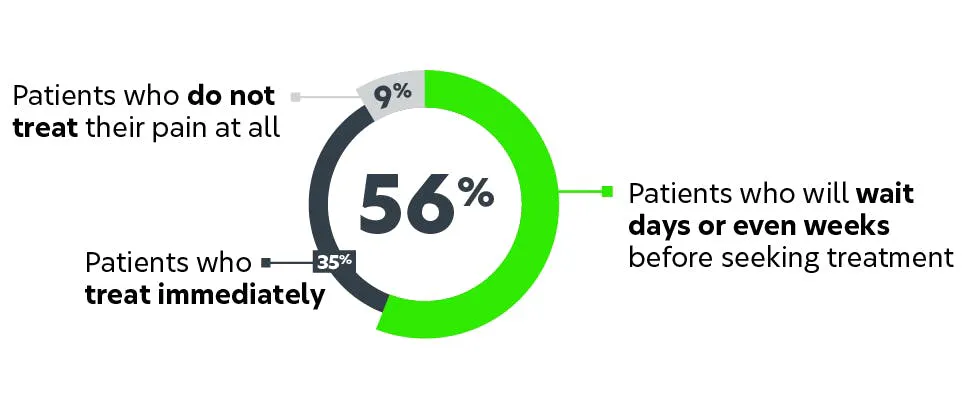
![Statistics on seeking pain relief treatment]()
Most Australians have experienced everyday pain, some with greater frequency and impact. With 4 in 10 Australians in pain experience it daily. Whilst 56% of pain sufferers wait to treat their pain
Whether a fear of dependency or a preference for natural remedies, HCPs need to be sensitive of a patient’s fears and values when engaging with them in a conversation about pain.
-
How can HCPs encourage patients to open up about pain?
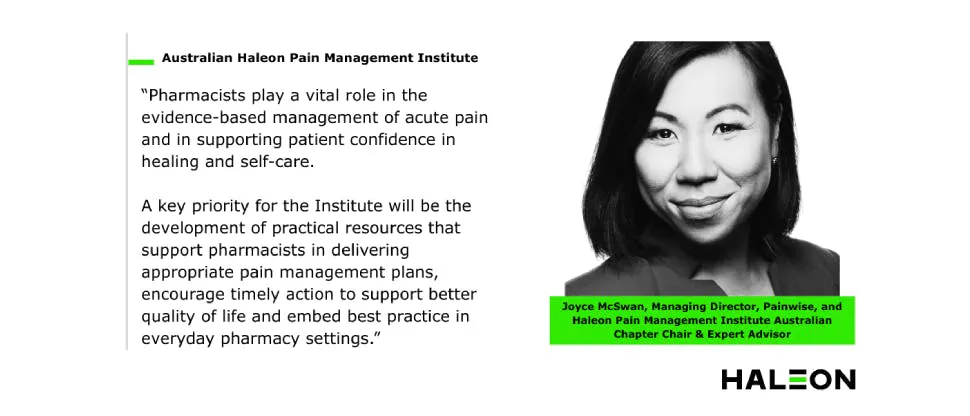
![Joyce McSwan quote]()
With ever-increasing pressures on frontline healthcare services, enriching HCP-patient interactions can be challenging. Due to limited contact time with each patient, it can be hard for HCPs to obtain the information they need to make the most appropriate pain management recommendations. Yet, the time spent with an HCP can be the most important window to evaluate a patient’s pain.
The Haleon Pain Management Institute can help support healthcare professionals facing increasing time pressures, by providing evidence based education and practical tools to enhance pain assessment, inform pain management decisions, and improve outcomes for people living with pain.
-
Asking the right questions
![Banner: quality patient-professional conversations]()
There are ways to maximise time with patients, so that even the busiest HCP can gather the data needed to relieve pain efficiently. John Bell gives advice on how to proceed: “We ask questions, appropriate questions, open-ended questions like ‘how is this treatment? How is it working for you? What kind of pain do you have? When is this pain worst? When is it better? What kind of things relieve your pain? What questions do you have for me?’ Importantly, open-ended questions like these are often effective conversation starters and will encourage many patients to begin to talk about their pain.”
Thus, knowing which questions to ask, and importantly the questions to avoid, can help patients feel comfortable enough to talk about their pain.
-
Let’s Listen To Pain
![3 images of a man progressing from looking in pain to smiling]()
Getting patients to open up about pain has never been easy. Societal and cultural taboos affect how patients talk about pain, even with professionals. Age, gender, and background also change how patients and HCPs engage. However, by acknowledging all of these factors, and asking the right questions, HCPs can reach out and open new avenues of conversation.
With the right insight, patients don’t have to leave feeling that their pain wasn’t heard. They can leave knowing that you listened to their pain.


A helping hand from Haleon
At Haleon, we believe in making sure that every patient gets the optimal outcome they need to manage their unique pain experience. Using information from the Haleon Pain Index, we’ve established five different patient profiles, describing their relationship with and the handling of their pain. Based on a deep understanding of the human pain experience, these five profiles can help you maximise those precious minutes with patients and individualise your approach.
We’re committed to providing HCPs with new tools and techniques, sharing the latest advances and bringing innovation that will allow you to better #ListenToPain.
Discover more pain management resources below

Pain Management protocols
Pain protocols is a stepwise approach to manage commonly seen pain states and provide patient support.
Coming Soon

#ListenToPain
Discover a personalised approach to pain management. Better conversations for better clinical outcomes.

Patient care resources
Access resources to facilitate better conversation around personalised pain management.