Impact on patient quality of life
Could your patients’ enamel wear end up making them look older?
Nobody wants to look old before their time, yet when it comes to the signs of ageing we worry about most, teeth are often lower on the list. Twice as many people fear their skin becoming wrinkly or losing elasticity versus those concerned about tooth wear.1 The numbers reflect our behaviours; we routinely take steps to protect our skin from sun damage but fewer actively look to prevent enamel wear. It’s surprising. Because although there’s no causal link between age and tooth wear, the most visible symptoms of wear – surface changes (smoothing), translucency, yellowing, loss of structural features (such as rounding), – can create the appearance of ageing, making us look or feel older than we actually are.
But it’s not just about aesthetics. Tooth wear can negatively impact self-esteem, body image and quality of life.2,3,4,5 It can also lead to dentine hypersensitivity6 and, in extreme cases, complete loss of the crown.7 Progression isn’t inevitable – but steps can be taken to help prevent it.
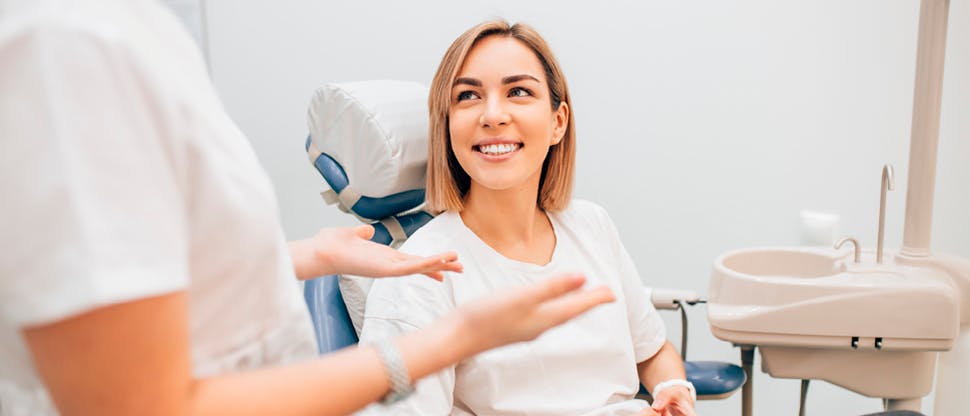
Dental healthcare professionals (DHCPs) can help patients prevent erosive tooth wear (ETW); they’re the only people who can spot the early signs. When patients are alerted to the problem, they can be motivated to act.
Management hinges on at-home behaviours: diet, lifestyle and oral hygiene. However, prevention begins in clinical practice, with DHCPs routinely checking for symptoms and tailoring advice.
In a world where appearance matters more than ever,8,9 DHCPs can help patients avoid the ramifications of ETW. If they protect their enamel like they protect their skin, the risk of tooth wear can be reduced.
-
What is Erosive Tooth Wear (ETW)?
![what is erosive tooth wear (ETW)?]()
What is Erosive Tooth Wear (ETW)?
“ETW is erosion combined with other forms of physical wear such as abrasion and attrition,” says Professor David Bartlett, Head of the Centre for Oral, Clinical & Translational Science and Prosthodontics, King’s College London. “The term is an acknowledgement that with ETW, in most instances, you have a combined effect: chemical loss (erosion), and mechanical loss (wear).”
Explore an overview of erosive tooth wear.
-
Prevalence & Awareness
![prevalence and awareness]()
Prevalence & Awareness
Global prevalence of erosive tooth wear (ETW) ranges between 20-45%,10,11 with 2-10% of adults and children showing severe signs of wear that might need treatment.10,12
Explore more on the global prevalence of ETW.
-
Assessment
![assessment]()
Assessment
Early diagnosis of erosive tooth wear (ETW) is vital. Patients often only notice wear when their teeth look thinner or more yellow.13 It’s harder to treat at this stage. DHCPs are the only ones who can see the early signs – but only if they’re actively looking for them. Unfortunately, dental examinations rarely include routine assessment of ETW.
Learn more about using the BEWE.
-
Prevention & Solution
![prevention and solution]()
Prevention & Solution
“The more we educate our patients the better we can help them,” says Ms Ester Hoekstra, M.Sc., a teaching and practicing dental hygienist in Germany. “To educate about healthy food for body AND teeth. To give tips on how to clean their teeth at home, to educate about fluoride and the difference between toothpastes. As dental hygienists, we have and take time for that.”
Find out about how to help your patients prevent ETW.


Superheroes for smiles
The associations between ageing and tooth wear continue to be explored. Studies are starting to emerge that show that erosive tooth wear generally increases with age,10,14,15 and can affect anyone – but the evidence-base to date isn’t substantial. Nevertheless, patients’ perceptions matter.
“There isn’t an awful lot of evidence to say as you get older you inevitably get more tooth wear,” says Professor David Bartlett. “But one of the signs of ageing – according to patients – is that their teeth get shorter and become yellower and more translucent. That, in their perception, is understood as ageing.
“The weight of evidence to support age and progression is insufficient at a clinical level. There is evidence for a slow and progressive increase and wear over time, but the main factor in creating a situation where a dentist can recognize wear is the risk factors.”
By routinely assessing tooth wear and communicating the risk factors, dental healthcare professionals can play a major part in educating patients and helping them prevent tooth wear. So patients can think about caring for their teeth like they think about caring for their skin.
It’s the chance to be a superhero for smiles – and help stop patients feeling old before their time.
Learn more about ETW and how to help your patients